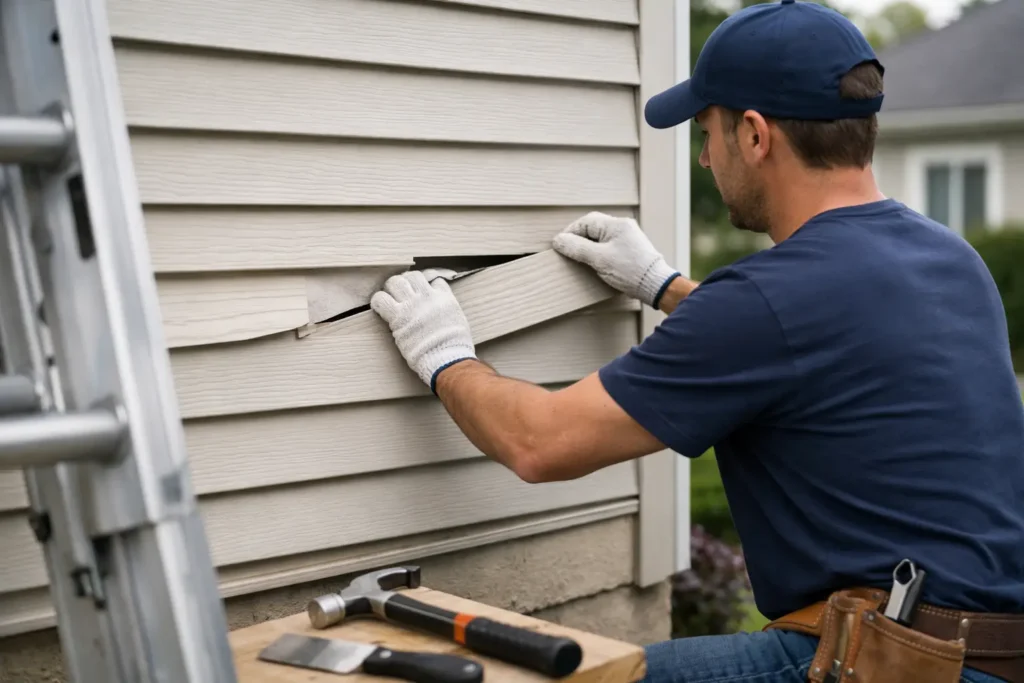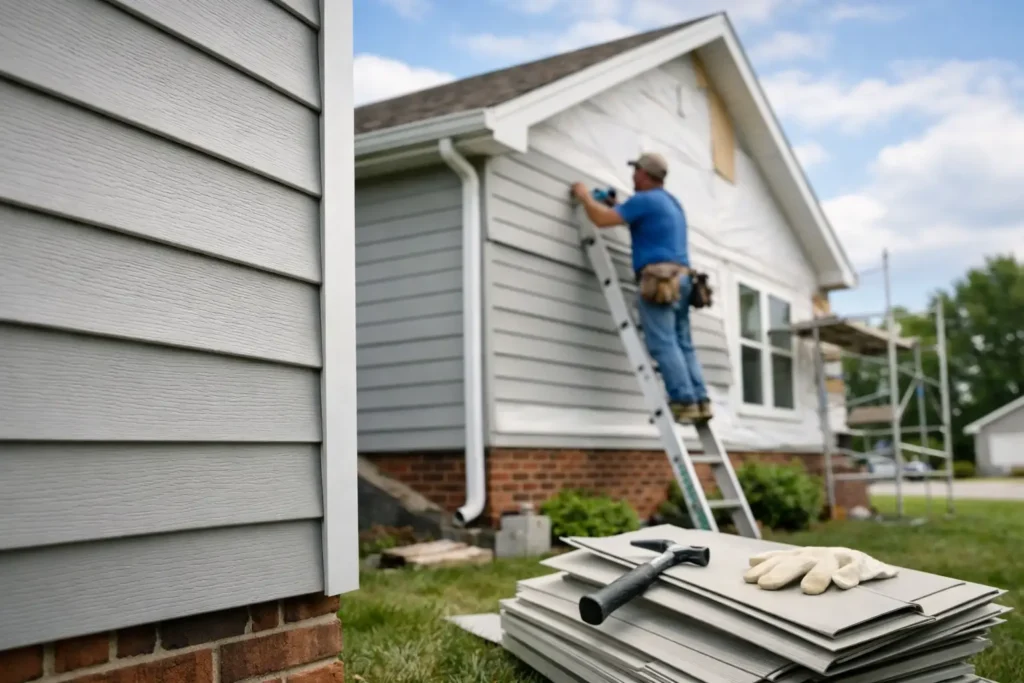
That chalky residue on your hand after touching old siding is usually the first sign the material has reached the end of its useful life. If you are planning to replace aluminum siding with vinyl, the real question is not just whether vinyl looks better. It is whether the switch will give your home stronger weather protection, lower upkeep, and a cleaner finish that holds up through Ohio’s freeze-thaw cycles, summer heat, and wind-driven rain.
For many homeowners, aluminum siding has simply aged out. It may still be attached to the house, but that does not mean it is performing well. Dents from hail, faded color, noisy movement in the wind, and old caulk lines around trim are all clues that the exterior is no longer doing the job you need it to do.
Why homeowners replace aluminum siding with vinyl
Aluminum siding had its moment because it resisted rot and insects better than wood. The problem is that age tends to expose its weak points. It dents easily, the factory finish can oxidize, and repairs often stand out because matching older aluminum panels is difficult.
Vinyl solves several of those headaches at once. Color runs through the material, so you are not dealing with the same painted surface breakdown that makes old aluminum look tired. It also gives homeowners more options in profile, texture, and trim details, which matters when you want the house to look updated rather than patched together.
There is also the maintenance factor. Most homeowners are not looking for another exterior project in two or three years. They want siding that looks good, sheds water properly, and does not ask for much beyond occasional cleaning. That is where vinyl usually makes the strongest case.
Is replacing aluminum siding with vinyl always the right move?
Not always. Some aluminum siding is still structurally sound, and in limited situations, targeted repairs may buy more time. If the damage is isolated to a small section and the underlying wall system is dry and solid, repair can be the practical short-term decision.
But there is a point where repair stops being efficient. If multiple walls are dented, seams are loose, color is badly faded, or moisture has gotten behind the siding, replacement becomes less about appearance and more about protecting the house. That is especially true in areas where storms, heavy rain, and seasonal temperature swings put extra stress on older exterior materials.
The hidden factor is what sits underneath. When aluminum siding has been on a home for decades, there can be issues behind it that you cannot see from the driveway. House wrap may be missing or outdated. Trim details may not be flashing water correctly. In some homes, previous repairs were done in a way that kept the siding attached but did not really solve the water management problem.
What changes when you replace aluminum siding with vinyl
The biggest change is not cosmetic, although curb appeal improves quickly. The bigger shift is in how the wall system performs.
A proper vinyl siding replacement gives the installer a chance to inspect the sheathing, address soft spots, improve the moisture barrier, and rebuild trim transitions around windows, doors, soffits, and corners. That work matters more than the panel itself. Good siding should not just cover a wall. It should help the wall drain and dry the way it was designed to.
Vinyl also expands and contracts differently than aluminum, so installation technique matters. Panels need room to move. Fasteners need to be placed correctly. Trim channels have to be sized and aligned so the finished exterior looks crisp without binding. When that part is done right, vinyl handles seasonal movement well and stays neat over time.
For homeowners in places like Lima, Findlay, Elida, and Shawnee Township, weather performance is not theoretical. You need materials that can deal with a humid summer, wind in the shoulder seasons, and winter conditions that expose weak spots fast. That is one reason many older aluminum-sided homes eventually transition to vinyl.
Should you go over the old aluminum or remove it first?
This is one of the most important decisions in the whole project. In some cases, vinyl can be installed over existing aluminum siding. That approach may seem simpler, but it is not always the best choice.
Installing over aluminum can make sense if the old siding is flat, secure, and the wall underneath is in excellent condition. Even then, the surface has to be prepared carefully so the new siding does not look wavy or uneven.
Removal is often the better route when the aluminum is dented, loose, or hiding signs of moisture trouble. Taking it off allows for a proper inspection of the wall assembly, which is where many long-term problems show up. If there is water damage around windows, outdated flashing, or rotted trim, you want to know before the new siding goes on, not after.
There is no one-size-fits-all answer here. The right decision depends on the condition of the existing siding and the age and construction of the home.
Benefits of vinyl that matter in real life
Most homeowners are not comparing materials in a lab. They are thinking about what life looks like after the project is done.
Vinyl tends to win on daily practicality. It is easier to maintain, it does not have the same denting issues as aluminum, and modern styles offer a cleaner, more updated appearance. If energy performance is a concern, insulated vinyl siding may also be worth discussing, especially on homes that feel drafty or have older wall assemblies.
That said, vinyl is not indestructible. Lower-quality products can crack in extreme cold or warp if installed poorly. Darker colors may behave differently in direct sun. These are not reasons to avoid vinyl. They are reasons to choose the right product and have it installed with attention to local climate conditions.
Common problems found during aluminum siding replacement
Homeowners are often surprised that the siding itself is not the only issue. Once aluminum comes off, a few recurring problems tend to show up.
Moisture damage around windows is common, especially on older homes where flashing details were minimal. In some cases, trim boards have softened from years of small leaks. You may also find old foam board, little to no weather barrier, or previous patchwork that never really addressed the source of the issue.
This is actually one of the advantages of replacement. It gives you a chance to correct the parts of the exterior system that were underperforming for years. A clean vinyl installation over a properly prepared wall is a very different result than simply covering old material and hoping for the best.
How to plan a replace aluminum siding with vinyl project
Start by looking beyond the panels. The condition of the trim, soffits, fascia, window surrounds, and wall sheathing will all affect the scope of the work. If one part of the exterior has clearly aged out, adjacent components may need attention too.
Next, think about the finish you want the home to have when the work is complete. Vinyl offers enough variety now that homeowners can avoid the flat, builder-basic look that older products were known for. Profile, color, board width, and trim style all shape the final appearance.
It also helps to consider how visible imperfections are on your home’s layout. Long front elevations and strong afternoon light can make uneven walls more noticeable. That is another reason surface preparation and proper removal decisions matter so much.
Permits and code requirements may apply depending on the scope of the work and the municipality. In older neighborhoods especially, having a contractor who understands local requirements can keep the project moving without unnecessary delays.
What a good finished job should look like
When aluminum siding is replaced correctly, the house should look sharper, but it should also feel tighter and more finished around the details. Lines should be straight. J-channels and corner posts should look intentional, not bulky. Trim transitions should be clean around windows and doors. Most of all, the siding should look like it belongs on the house, not like it was forced over an aging exterior.
A good installation also sounds different. Homeowners often notice less rattling and fewer visible signs of movement in windy conditions compared with old, loose aluminum panels.
If the goal is a lower-maintenance exterior that stands up better to Ohio weather, replacing aluminum with vinyl is often a smart move. The key is treating it as a full exterior upgrade, not just a cosmetic swap. When the wall prep, moisture control, and installation details are handled properly, the result is not just a different siding material. It is a home exterior that works harder for years with far less attention.