A wall can look fine from the driveway and still be holding moisture where you cannot see it. That is what makes mold behind siding symptoms so easy to miss at first. By the time stains, odors, or interior damage show up, the problem has often been building through more than one Ohio season of rain, humidity, and freeze-thaw stress.
For homeowners in places like Findlay, Lima, and nearby communities, hidden moisture behind vinyl siding usually starts with a small failure. It might be a loose panel after wind, failed caulk around a window, a damaged J-channel, or water getting in where flashing is not doing its job. Siding is designed to shed water, not hold it. When drainage or ventilation gets interrupted, the wall system behind the siding can stay damp long enough for mold to grow.
The most common mold behind siding symptoms
One of the first signs is a musty smell near an exterior wall, especially after heavy rain or during humid weather. Homeowners sometimes notice it in a bedroom, near a window, or in a finished basement and assume it is an indoor humidity issue. But if the odor keeps returning in the same area, the source may be behind the siding rather than inside the room.
Discoloration is another warning sign. You may see faint brown, green, or black staining on interior drywall, trim, or even on exterior sheathing if a section of siding has already been removed. On the outside, streaking below seams or around penetrations can point to repeated moisture movement. Staining alone does not always mean mold, but it does mean water has been active where it should not be.
Warped or soft wall areas deserve attention. If drywall feels slightly spongy near an exterior wall, or trim boards seem swollen, moisture may be working inward from the outside. Vinyl siding itself does not absorb water the way wood does, so homeowners sometimes assume the wall underneath is protected. In reality, the siding can look mostly normal while the materials behind it are wet.
You may also notice peeling paint or bubbling wallpaper on an exterior-facing wall. That happens when moisture trapped in the wall assembly starts affecting interior finishes. This is a later-stage symptom in many cases, which is why it should not be ignored.
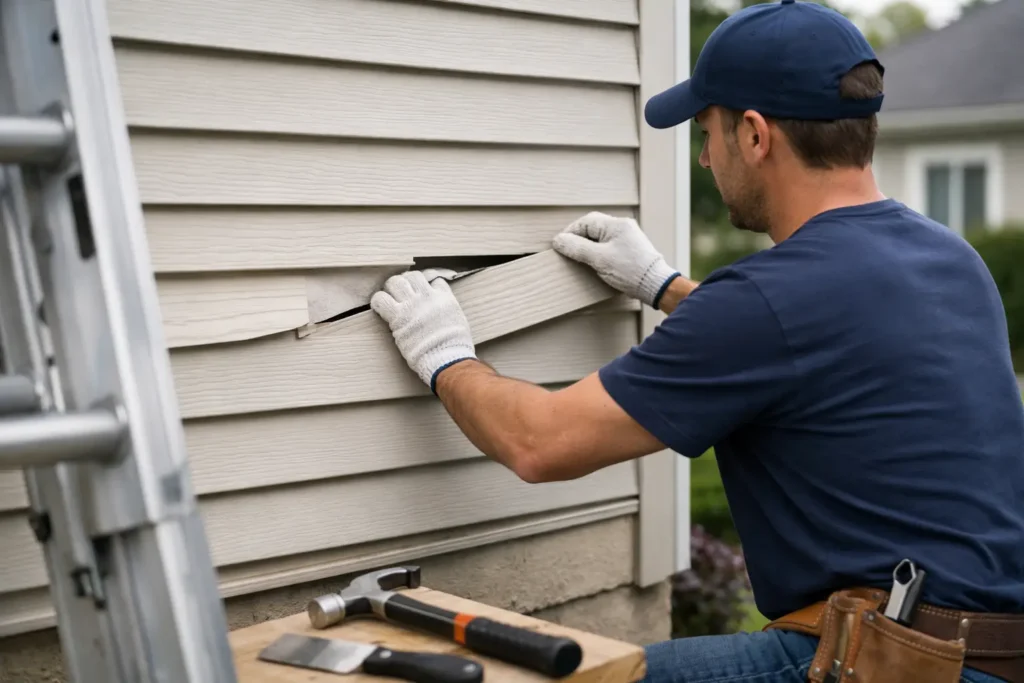
Another red flag is siding that looks loose, wavy, or uneven in one section. That does not always mean mold, but it can mean the wall sheathing underneath has started to deteriorate. If the substrate changes shape, the siding installed over it may no longer sit flat.
Higher indoor humidity in one part of the house can also be part of the story. If one room feels damp, smells stale, or seems harder to keep comfortable, hidden wall moisture may be affecting insulation and air sealing. In Ohio, where homes get tested by both summer humidity and winter cold, wet wall cavities can quickly turn into comfort problems.
Why mold behind siding happens in the first place
Mold needs moisture, organic material, and time. Behind siding, it usually finds all three. House wrap, flashing, trim details, and proper installation practices are what keep incidental water from becoming a long-term problem. When one of those parts fails, even good siding can be undermined.
The most common cause is water intrusion around windows, doors, light fixtures, vents, and roof-to-wall intersections. These are transition points, and transition points are where details matter most. If flashing is missing, poorly integrated, or damaged, rainwater can slip behind the siding and stay there.
Storm damage is another factor. Strong winds can loosen panels or pull them away from the wall just enough for water to get in. Hail and impact damage can create cracks that are easy to overlook from the ground. In neighborhoods with mature trees, repeated branch contact can also damage siding over time.
Age plays a role too. Older siding systems may have brittle panels, worn trim, or earlier installation methods that are less effective than current best practices. Sometimes the problem is not the siding itself but what is happening behind it, such as rotted sheathing, failed wrap, or old repairs that never fully addressed the original leak.
What mold behind siding symptoms can look like inside the home
The tricky part is that homeowners often spot the indoor effects before they suspect an exterior issue. A recurring patch of mildew near baseboards, condensation that seems excessive on one window, or paint that keeps failing on the same wall can all be clues.
Allergies can sometimes get worse in rooms near the affected wall. That does not prove mold behind siding on its own, and indoor air concerns should never be diagnosed casually. Still, if occupants notice irritation, headaches, or a persistent musty smell tied to one area of the house, hidden moisture should be investigated.
Keep in mind that not every wet wall has active mold, and not every mold issue produces dramatic visible growth. Sometimes the materials are simply staying damp enough to create odor, staining, and gradual deterioration. That is why early signs matter.
When the symptom is really a drainage problem
Some mold behind siding symptoms are actually symptoms of a larger water management issue. Gutters that overflow, downspouts that dump water near the foundation, and landscaping that slopes toward the house can all increase moisture at the wall. In those cases, replacing a damaged siding section alone may not solve the problem.
This is especially relevant in Northwest Ohio, where repeated rain events, snow melt, and freeze-thaw cycles can stress any weak point in the exterior. Water may enter high, travel down behind the siding, and show up lower on the wall. That can make the source harder to identify without a proper exterior inspection.
What should happen next if you suspect hidden mold
The goal is not to guess from the curb. The goal is to confirm whether moisture is getting behind the siding and whether the wall materials underneath are still sound. That usually means looking at the condition of the siding, trim, flashing, and the areas around penetrations first. In some cases, a limited removal of siding is needed to verify what is happening behind the wall.
If the sheathing is wet, soft, or visibly contaminated, the repair needs to address both the moisture entry point and the affected materials. Simply cleaning the surface or sealing over the problem does not fix the wall assembly. If damaged components stay in place, moisture and mold can return.
This is also where material matching matters. On homes with existing vinyl siding, the visible damage may be limited to one elevation or one section near a window. A precise repair approach can preserve the rest of the exterior while correcting the leak path underneath.
When it is repairable and when it points to bigger siding failure
It depends on how long the moisture has been there and how far it has spread. If the issue is isolated to one section caused by storm damage or failed flashing, a targeted repair may be enough. If there are repeated problem spots, widespread loose panels, aging trim, and signs of deteriorated sheathing in multiple areas, the home may be dealing with a broader exterior failure.
That is why symptom patterns matter more than any one sign. A musty smell by itself could come from several sources. A musty smell plus warped interior trim, loose siding near a window, and staining after rain tells a much clearer story.
Experienced siding specialists look at those clues together. For homeowners, the key is not to wait for obvious structural damage. Hidden moisture tends to get more expensive in terms of disruption, material loss, and indoor comfort the longer it sits.
How to lower the risk going forward
Well-installed vinyl siding performs best when the full water-management system behind it is doing its job. That includes sound sheathing, proper house wrap, correct flashing integration, secure trim details, and enough room for drainage and movement. Maintenance matters too. After storms, it helps to check for cracked or lifted panels, trim separation, and any new gaps around exterior openings.
Pay attention to repeated warning signs, not just dramatic ones. A faint odor after every hard rain, one section of siding that never looks quite right, or paint failure on the same interior wall year after year is worth taking seriously. Small clues are often the early version of a much larger wall problem.
A dry wall system is not something homeowners think about often, and that is a good thing. When siding, flashing, and drainage details are working together, they stay out of sight and do their job quietly. If your house is showing mold behind siding symptoms, the most helpful move is to treat them as an exterior protection issue, not just a cosmetic one.