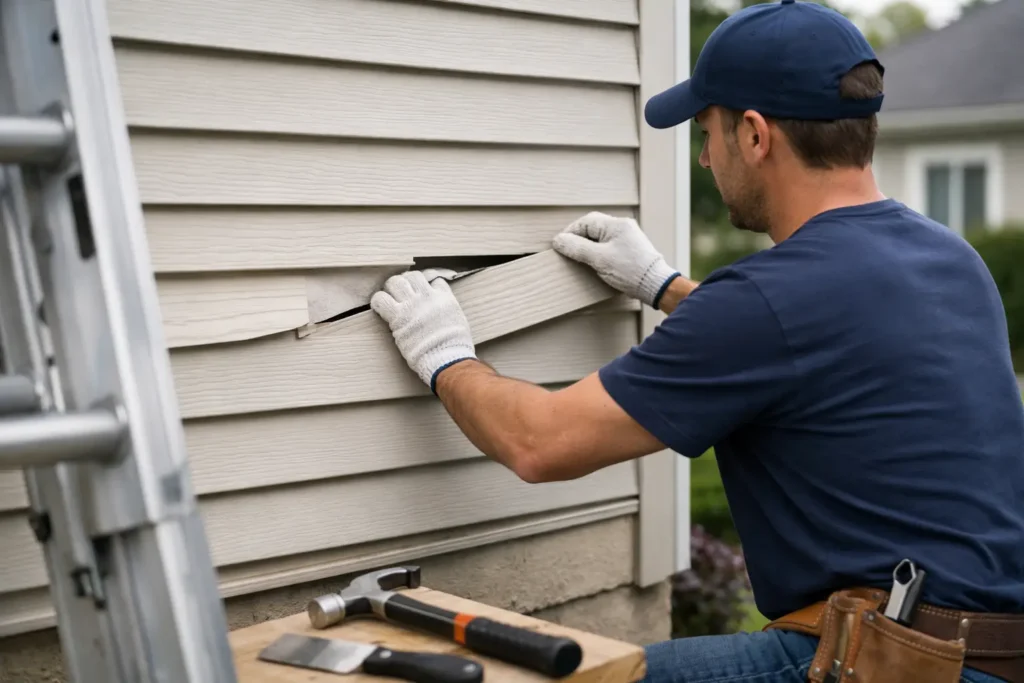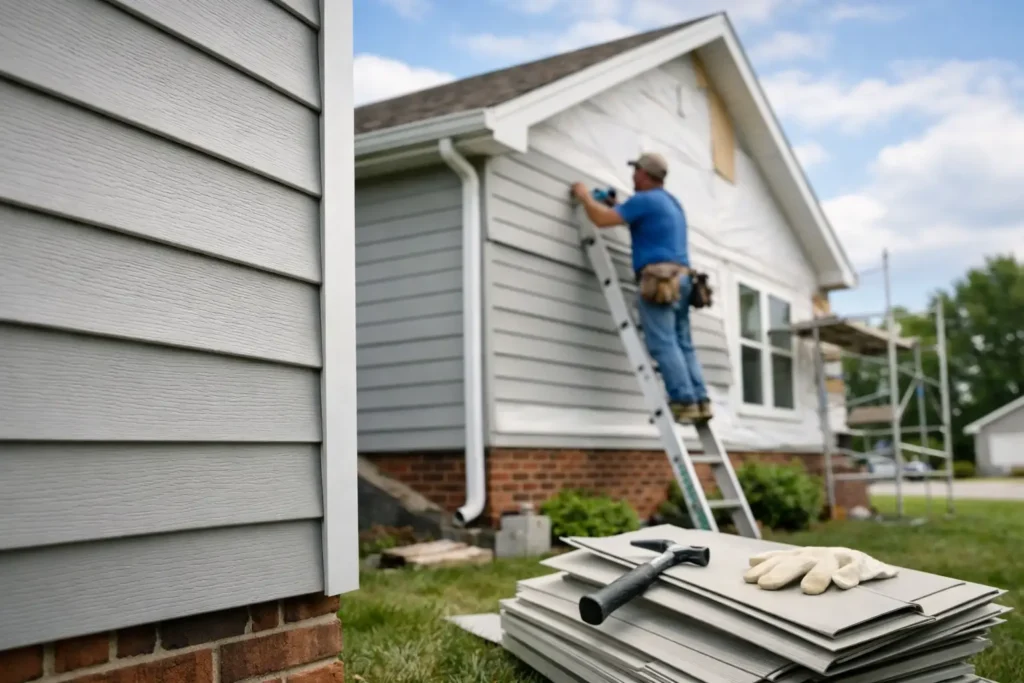
A few loose panels after a windstorm are one thing. Soft sheathing, recurring cracks, and water stains inside the house are something else entirely. If you’re trying to decide whether to repair or replace house siding, the right answer usually comes down to how far the damage has spread, how old the siding is, and whether a fix will actually hold up through another Ohio winter.
For many homeowners, the hardest part is that siding problems rarely stay cosmetic for long. What starts as a warped panel or a small gap near a corner post can turn into moisture intrusion, mold risk, and higher heating and cooling loss. That is why this decision should be based on condition and performance, not just appearance.
When repair makes sense
Siding repair is often the smart move when the issue is isolated and the rest of the exterior is still doing its job. A handful of cracked vinyl panels after hail, a section that came loose in strong wind, or minor impact damage near a lawn equipment area can usually be addressed without replacing the whole house.
Repair also makes sense when the siding is still within a reasonable service life and the color match is achievable. On newer vinyl siding, replacing a damaged section can restore the protective barrier without creating an obvious patchwork look. In neighborhoods with consistent home styles, maintaining the original appearance matters just as much as fixing the damage itself.
Another good repair scenario is when the problem is clearly external and not tied to a larger system failure. For example, if one side of the home took the worst of a storm and the rest of the siding remains secure, straight, and dry underneath, targeted repair is often enough.
Signs you may need to replace house siding
There is a point where repair stops being efficient. If you keep fixing one section only to find another weak spot a few months later, the siding is no longer giving you reliable protection.
One of the clearest signs you need to replace house siding is widespread brittleness or repeated cracking. Vinyl siding expands and contracts with temperature swings. Over time, older material can lose flexibility, especially after years of sun exposure and freeze-thaw cycles. Once that happens, panels become easier to crack and harder to repair without causing damage nearby.
Moisture is another major warning sign. If siding is trapping water behind the panels, you may notice staining, swelling around trim, mildew smells, or soft spots when areas are opened up. At that stage, the issue is no longer just the visible outer layer. The wall assembly itself may be affected, and a surface repair may only hide the real problem.
Fading can matter too, though not for purely cosmetic reasons. Heavy fading often signals age and material wear. If a home has multiple sun-beaten elevations, significant chalking, and panels that no longer lock tightly, replacement may be the more dependable long-term choice.
The real question: cosmetic damage or system failure?
Homeowners often look at siding and ask, “Can this panel be fixed?” A better question is, “Is the siding system still protecting the house the way it should?”
That difference matters. A single cracked panel is usually a repair issue. Loose sections caused by improper fastening, failing trim channels, water infiltration around windows, or underlying wall movement point to something bigger. If the supporting components are compromised, replacing a few visible panels may not solve the root cause.
This is especially relevant in areas that see wind-driven rain, summer humidity, and winter freeze-thaw conditions. In that kind of climate, small openings can become bigger performance problems faster than homeowners expect. Siding is not just there for curb appeal. It sheds water, helps manage airflow, and protects the structure from repeated weather exposure.
How age affects the repair-or-replace decision
Age does not automatically mean replacement, but it changes the odds.
If your vinyl siding is relatively new and the damage is limited, repair is usually straightforward. The challenge increases as siding ages because older products may be discontinued, colors may have faded unevenly, and the material itself may be more brittle. Even when you can repair it, the finished result may not blend as well or last as long as you want.
Older homes also tend to have layered issues. You might start with a damaged panel and then discover outdated house wrap, minor rot around a window, or past repairs that were not done correctly. At that point, replacement can give you a cleaner reset and a better chance to correct hidden problems before they spread.
Repair or replace house siding after storm damage
After a storm, the right answer depends on more than what you can see from the driveway. Wind can unzip panels, hail can fracture surfaces, and flying debris can punch holes that look small but allow water behind the siding.
If storm damage is concentrated in one section and the surrounding material is in good shape, repair is often enough. If the storm exposed weak, aged, or improperly installed siding across multiple elevations, full replacement may be the better move.
This is where local experience matters. Homes in places like Lima, Findlay, Elida, and surrounding communities deal with a mix of strong winds, temperature swings, and seasonal moisture. Siding has to do more than look clean from the street. It has to stay attached, shed water, and hold up through repeated weather stress.
Energy efficiency should be part of the decision
Most people think about siding in terms of damage and appearance first. Energy performance should be part of the conversation too.
If your existing siding is older, poorly insulated, or allowing noticeable air movement around the exterior walls, replacement may offer benefits that repair cannot. While siding alone is not the only factor in utility bills, a properly installed exterior system with sound insulation details can help reduce drafts and improve comfort.
That said, not every energy complaint means you need all-new siding. Sometimes the issue is localized around trim, penetrations, or one damaged wall area. A careful inspection can tell the difference between a repairable weak point and a house-wide performance problem.
Why matching matters more than homeowners expect
One reason some homeowners lean toward replacement is simple: they do not want obvious patched areas. That concern is valid.
Color matching on vinyl siding can be tricky, especially when the original siding has been exposed to years of sunlight. Even if the manufacturer color still exists, the installed siding may have weathered enough that a new panel stands out. Texture and profile can also vary from one product line to another.
This does not mean repair is a bad option. It means the visual result should be part of the decision. On a newer home, a repair can look nearly invisible. On an older exterior with fading on every elevation, replacement may produce the cleaner and more consistent finish homeowners are hoping for.
A practical way to decide
If you are weighing whether to repair or replace house siding, start with scope, age, and moisture risk.
If the damage is limited, the siding is still structurally sound, and there is no evidence of water getting behind the panels, repair is usually the practical choice. If the damage is widespread, the material is brittle or faded across large areas, or moisture has reached the wall beneath, replacement is often the safer route.
It also helps to think one season ahead. A temporary-looking fix before heavy rain, snow, or another freeze-thaw cycle may not give you much peace of mind. A durable repair should solve the problem, not just cover it until the next weather event.
What homeowners often regret
The most common regret is waiting too long because the damage seemed minor. Siding issues have a way of spreading quietly. A small opening invites moisture. Moisture leads to hidden deterioration. Then what could have been a contained exterior repair becomes a larger project involving the wall underneath.
The second regret is repairing based on appearance alone. A section can look manageable from the outside while the fastening, underlayment, or sheathing behind it tells a different story. That is why the best siding decisions are based on the full condition of the assembly, not just the face of the panel.
For homeowners in Northwest Ohio, the right choice is the one that keeps the home protected through real weather, not just one that looks acceptable for now. Sometimes that means a focused repair. Sometimes it means replacing aging siding before it creates bigger trouble. Either way, the goal is the same: an exterior that holds up, looks right, and keeps doing its job year after year.
A good siding decision should leave you with fewer worries the next time the wind picks up and the temperature drops.