A siding panel that looks fine in July can start rattling, warping, or letting in moisture by February if it was never built for Ohio weather. That is why weather resistant vinyl siding Ohio homeowners choose needs to do more than look good from the street. It has to stand up to driving rain, heavy wind, humid summers, and the freeze-thaw swings that can wear down weaker exterior materials.
For homeowners in places like Lima, Findlay, Elida, and Shawnee Township, siding performance is not a small detail. It affects comfort, maintenance, energy use, and how well your home is protected year after year. Vinyl siding remains one of the most practical choices for this region, but not every panel, installation method, or repair approach delivers the same result.
What weather resistant vinyl siding means in Ohio
Weather resistance is not just about one big storm. In Ohio, the real test is repeated exposure. Siding may face spring wind and hail, summer UV exposure, fall temperature swings, and winter ice in the same twelve-month stretch. A product that handles one season well can still fail over time if it expands too much, traps moisture, or becomes brittle in cold weather.
Good vinyl siding is designed to flex with temperature changes, shed water effectively, and resist fading from sun exposure. It also needs proper fastening and spacing. That part matters more than many homeowners realize. Even a quality product can buckle or loosen if it is nailed too tightly or installed without room for movement.
Weather resistance also depends on what sits behind the siding. House wrap, flashing, starter strips, and trim details all play a role in keeping bulk water out and allowing trapped moisture to escape. If one part of the system is weak, the whole exterior becomes more vulnerable.
Why Ohio weather is hard on exterior siding
Ohio does not have a single-weather pattern problem. It has several. That is what makes siding selection here more technical than it first appears.
Wind-driven rain can push water into weak seams and around windows. Freeze-thaw cycles can widen existing gaps and expose areas that were already vulnerable. Summer humidity can make moisture management more important than homeowners expect, especially on older homes where previous siding layers or wall assemblies may not breathe well.
In Allen and Hancock County neighborhoods, mature trees can add another factor. Shade may reduce some UV wear, but it can also slow drying after rain and increase the chance of algae, mildew, or moisture issues on certain sides of the house. South- and west-facing walls often fade faster, while north-facing areas may stay damp longer. A weather-resistant siding solution has to account for both exposure and orientation.
The features that actually matter
When homeowners compare products, the conversation often starts with color and style. Those matter for curb appeal, but weather performance comes first.
Panel thickness makes a difference, though thicker is not automatically better if the product is poorly made. What you want is a well-manufactured panel with enough rigidity to resist impact and movement without becoming too stiff in cold weather. Products with better wind ratings are often worth a closer look in Ohio, especially in open areas where homes see stronger gusts.
A strong locking system helps panels stay seated during wind events. UV resistance matters too, particularly for darker colors that absorb more heat. If the siding includes insulation, that can improve energy performance and help the panels sit flatter against the home, but insulated siding is not the right fit for every wall condition. On some older homes, it takes more prep work to create a proper base.
Trim and accessory pieces deserve attention as well. Corners, J-channels, soffit connections, and window surrounds are common weak spots when installation is rushed. These are the places where water often finds its way in first.
Weather resistant vinyl siding Ohio homeowners can count on starts with installation
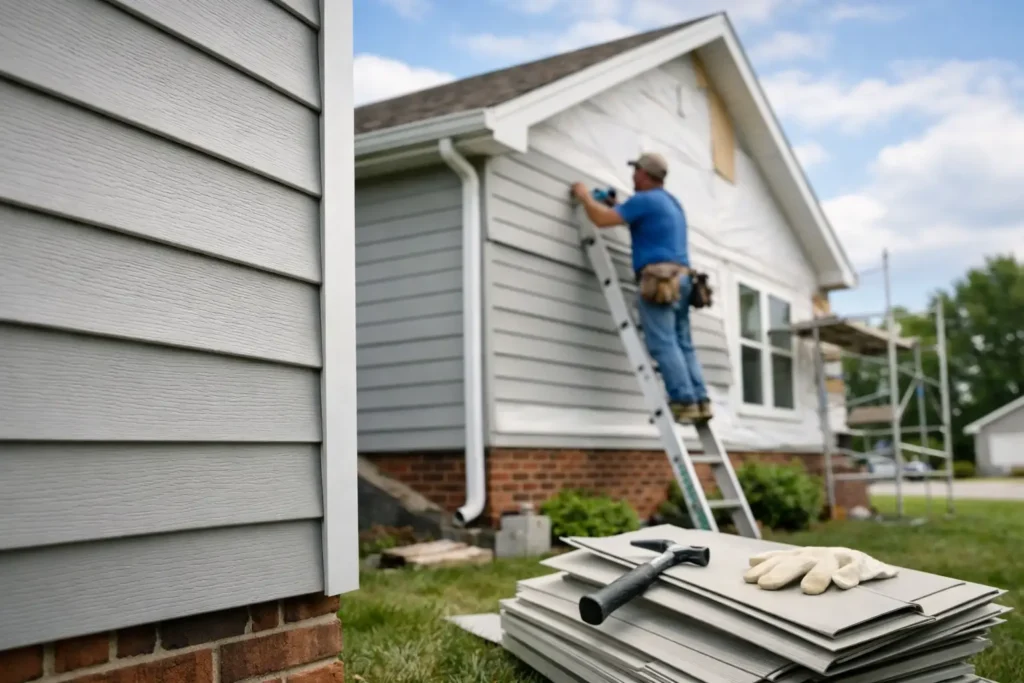
A lot of siding problems get blamed on materials when the real issue was installation. Panels need room to expand and contract. Fasteners need to be placed correctly. Flashing around doors, windows, roof lines, and penetrations has to direct water out, not just cover the edge.
This is especially important on replacement projects. Older homes may have hidden sheathing damage, uneven wall surfaces, or trim details that were pieced together over time. If new siding goes over unresolved problems, those issues do not disappear. They usually get worse behind the surface.
Proper installation also means understanding local code expectations and permit requirements where applicable. That matters because weather resistance is tied to method, not just product selection. A panel installed out of level or a missing flashing detail might not show up right away, but Ohio weather has a way of exposing shortcuts.
Repair or replace? It depends on the damage
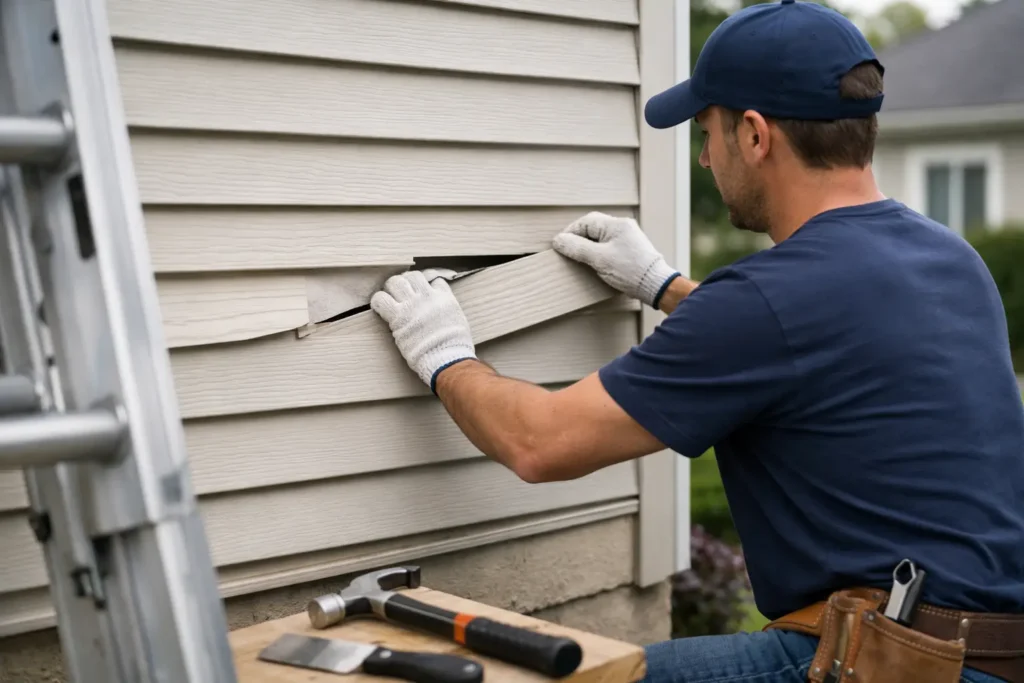
Not every weather-related siding issue means full replacement. If the problem is isolated, a targeted repair can restore protection and appearance without disturbing the rest of the exterior. Cracked panels after storm impact, loose sections after wind, or a few melted pieces near a grill are often repairable if matching materials are available.
The tougher cases are older homes with widespread fading, recurring moisture intrusion, or brittle siding that cracks easily during handling. In those situations, repairs may only buy time. If the siding has reached the point where color matching is difficult and multiple elevations show wear, replacement often gives a more dependable long-term result.
This is where local experience matters. A contractor who works regularly with vinyl siding can usually tell whether the issue is cosmetic, structural, or moisture-related. That diagnosis helps homeowners avoid the two common mistakes: replacing too much too soon or patching a system that is already failing.
Insulated vinyl siding and energy performance
Some Ohio homeowners are less worried about storms than they are about drafty rooms and rising utility bills. Insulated vinyl siding can help, but it should be viewed realistically. It is not a substitute for wall insulation, and it will not fix air leaks around old windows or attic bypasses.
What it can do is improve the exterior envelope, reduce minor thermal bridging, and give the siding more support. That can lead to a more solid feel, quieter walls, and better overall performance when combined with proper house wrap and trim work. On homes with older aluminum or worn wood siding, the upgrade can be noticeable.
Still, it depends on the house. Some projects benefit more from standard premium vinyl with careful water management details than from insulated panels alone. The best choice depends on wall condition, exposure, and what problem you are trying to solve.
Color, fading, and long-term appearance
Ohio homeowners usually want siding that holds up physically and still looks good years later. Fading resistance matters here because the weather is tough in both hot and cold seasons. UV exposure can wash out lower-grade siding, especially on elevations with direct afternoon sun.
Lighter colors tend to show fading less dramatically, while darker tones often make a stronger design statement but require better color retention technology. Neither choice is wrong. It just helps to understand the trade-off. If your home gets intense sun on one side and deep shade on another, some variation in aging can happen over time even with quality materials.
For partial repairs, exact color matching can be one of the hardest parts of the job. Existing siding may have aged enough that a fresh panel looks slightly off even if it is technically the same color family. In those cases, product knowledge and a careful eye matter as much as the repair itself.
What to look for if your current siding is struggling
A few warning signs show up before major failure. Panels may look wavy, feel loose in the wind, or show cracking near the bottom edges. You might notice higher humidity indoors near exterior walls, staining around trim, or caulk lines that keep reopening.
Sometimes the clue is subtler. Paintable trim may start failing next to otherwise intact siding, or one side of the house may repeatedly develop mildew. Those patterns can point to drainage or ventilation issues rather than just old panels. A weather-resistant siding system should work as a full exterior assembly, not as disconnected parts.
For many homeowners, the goal is simple: stop worrying every time the forecast calls for high wind, heavy rain, or another hard freeze. The right vinyl siding system can do that when the material, installation, and repair strategy all match the house and the climate.
Ohio weather does not reward shortcuts. It rewards materials that can move, shed water, hold color, and keep doing their job after season after season of stress. When your siding is built and installed for that reality, your home feels more protected every month of the year.