A house on the wrong side of an Ohio winter tells on itself fast. You see it in loose panels rattling during a windstorm, faded sections that never quite match the rest of the wall, and trim lines that let moisture hang around longer than they should. For homeowners looking at vinyl siding Findlay Ohio properties need, the real question is not just what looks good from the street. It is what holds up through freeze-thaw cycles, summer humidity, hard rain, and years of everyday wear.
That is where vinyl siding earns its place. In a market like Findlay, siding has to do more than cover the exterior. It has to protect the home, stay stable in changing temperatures, and keep maintenance from turning into a seasonal chore. Done right, it gives homeowners a cleaner appearance, better moisture control, and a more dependable exterior without the constant upkeep that comes with wood.
Why vinyl siding works well in Findlay Ohio
Ohio weather is tough on exterior materials, and Findlay sees enough seasonal swing to expose weak spots quickly. Cold snaps can make brittle or aging panels crack. Summer sun can bake lower-grade products until the color starts to chalk and fade. Wind-driven rain tests every seam, corner, and transition around windows and doors.
Vinyl performs well here because it is designed to flex with normal expansion and contraction while resisting rot, insect damage, and moisture absorption. That does not mean every vinyl siding job performs the same way. The product matters, but installation matters just as much. If panels are hung too tightly, they can buckle in heat. If flashing and trim are handled poorly, water can work behind the system even when the siding itself looks fine from the outside.
Homeowners in established neighborhoods often face a second issue – older exteriors that have been repaired in pieces over time. A home may have one wall with sun fading, another with storm damage, and trim that was replaced years ago in a color that no longer matches. In those cases, siding work is not only about protection. It is about making the exterior look consistent again.
What homeowners should expect from vinyl siding in Findlay Ohio
The best siding projects solve three problems at once. They protect the structure, improve day-to-day maintenance, and give the home a more finished look. If one of those pieces is missing, the result usually feels incomplete.
Protection starts below the surface. A solid vinyl siding system depends on proper house wrap, flashing, starter strips, trim details, and ventilation strategy. On homes with existing moisture concerns, simply covering the old problem rarely helps. The damaged area needs to be identified and corrected first. That is especially true around windows, rooflines, and lower wall sections where splashback and runoff tend to cause trouble.
Maintenance is where vinyl has a clear advantage for many homeowners. It does not need scraping or repainting, and normal cleaning is straightforward. That matters when you are trying to keep the house looking sharp without turning every spring and fall into another exterior project.
Appearance still matters, though. Siding replacement changes how a home sits on the lot visually. The right profile, trim contrast, and color choice can make a ranch feel more current or help a two-story home look cleaner and more balanced. The wrong combination can make a house look flat or mismatched, even if the installation itself is sound.
New installation, repair, or full replacement?
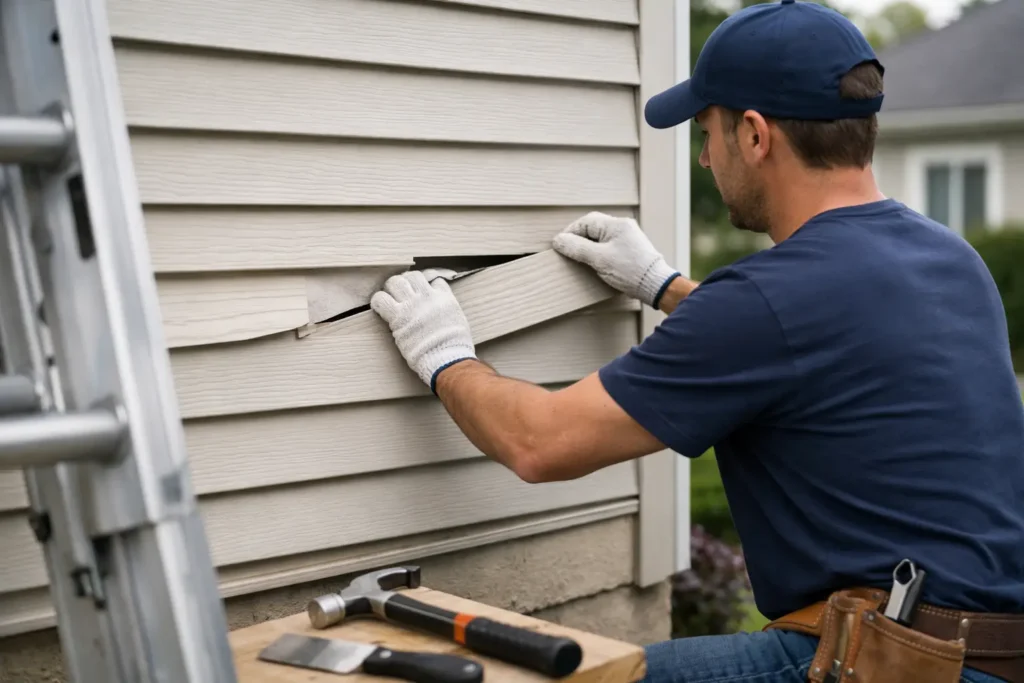
Not every home needs a full tear-off. Sometimes the issue is isolated to one side after wind damage, a section near the garage, or a few cracked pieces that have started to pull away. If the existing siding is still in decent condition and a close color match is possible, a targeted repair can restore both function and appearance.
That said, repair has limits. If the siding is brittle from age, heavily faded, or no longer available in a matching profile, patching one section can make the problem more noticeable instead of less. There is also the question of what sits underneath. If moisture has been getting in for a while, replacing panels alone may not address the real issue.
Full replacement makes more sense when the home has widespread fading, repeated storm damage, visible warping, or older materials that are no longer performing well. It also gives homeowners a chance to improve insulation value and modernize the exterior in one step. For houses with aluminum or aging wood siding, the shift to vinyl often means less maintenance and a more predictable long-term result.
The case for insulated vinyl siding
Insulated vinyl siding is not the right fit for every project, but it can be a strong option for homes where energy performance and wall rigidity matter. The added insulation helps support the panel and can improve the overall feel of the exterior. On some homes, that means less hollow sound, better resistance to minor impact, and a cleaner finished look across uneven wall surfaces.
In Findlay, where heating and cooling demands both matter over the course of a year, insulated siding can also support better thermal performance. It is not a substitute for proper wall insulation or air sealing, but it can contribute to a tighter exterior envelope. For homeowners noticing cold wall surfaces in winter or higher utility strain in older homes, it is worth considering as part of the broader siding decision.
The trade-off is that not every house needs that upgrade. If the wall assembly is already efficient and the main concern is replacing damaged or dated siding, standard premium vinyl may be the better match. The key is choosing based on the house itself, not just on the idea that more material always means better value.
Color matching and curb appeal are not small details
One of the more frustrating siding problems for homeowners is a repair that stands out from the street. Color matching sounds simple until you are trying to match years of sun exposure, manufacturer changes, and discontinued product lines. That is why experience matters on partial repairs and additions.
A good match is not just about picking a similar shade from a sample ring. It means accounting for fade, profile depth, shadow lines, and trim color relationships. Even when an exact match is not possible, there are smart ways to make the repair feel intentional rather than obvious. In some cases, replacing an accent area or adjusting trim creates a more balanced result than forcing one small patch into a nearly impossible color match.
For full replacements, color selection should be practical as well as attractive. Some homeowners want a bold contrast with shutters and fascia. Others want a quieter look that works with brick, stone, or roofing already in place. The best choice is usually the one that fits the home’s architecture, holds up visually in local light conditions, and still looks good after years of weather exposure.
Installation details make the difference
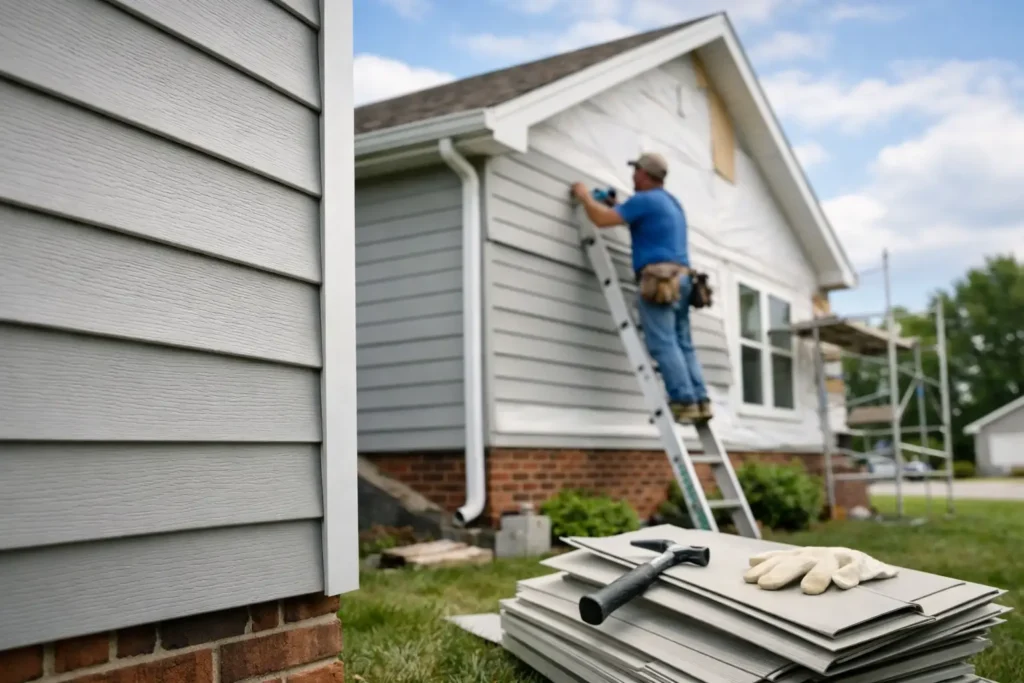
Vinyl siding has a reputation for being simple, but good installation is technical work. The panels need room to move. The wall needs to be flat enough for the finished surface to look right. Openings need proper flashing. Soffit and fascia details have to work with ventilation, roof edges, and water runoff.
This is also where local experience matters. Homes in Northwest Ohio deal with wind, rain, ice, and moisture conditions that expose shortcuts quickly. An installation that looks fine on day one can show problems after the first hard season if fasteners, clearances, and transitions were handled poorly.
Older homes can be even trickier. Walls may not be perfectly even, trim dimensions may vary, and previous repairs can leave hidden surprises once the old exterior comes off. A contractor focused on vinyl siding work is more likely to spot those issues before they turn into callbacks.
How to tell when your current siding is failing
Some signs are obvious, like cracked panels, loose sections, or a hole after a storm. Others are easier to miss. Repeated caulking failures around trim, bubbling paint indoors near exterior walls, mildew that keeps returning on one side of the house, or drafts near window edges can all point to siding-related problems or moisture intrusion behind the cladding.
Fading by itself is mostly cosmetic, but once siding becomes chalky, warped, or brittle, performance may not be far behind. If panels shift loudly in the wind or have started pulling loose near corners, the fastening system or substrate may need attention. And if one repair seems to lead to another every season, that is usually a sign the exterior system is aging out rather than just suffering from a one-time issue.
For homeowners comparing options, the most useful mindset is simple: look at siding as part of the home’s protection system, not just its outer skin. The right vinyl siding choice should fit the house, the weather, and the level of upkeep you actually want to live with. When those pieces line up, the result is not just a better-looking exterior. It is a home that feels more settled, more protected, and easier to maintain through whatever Ohio sends next.