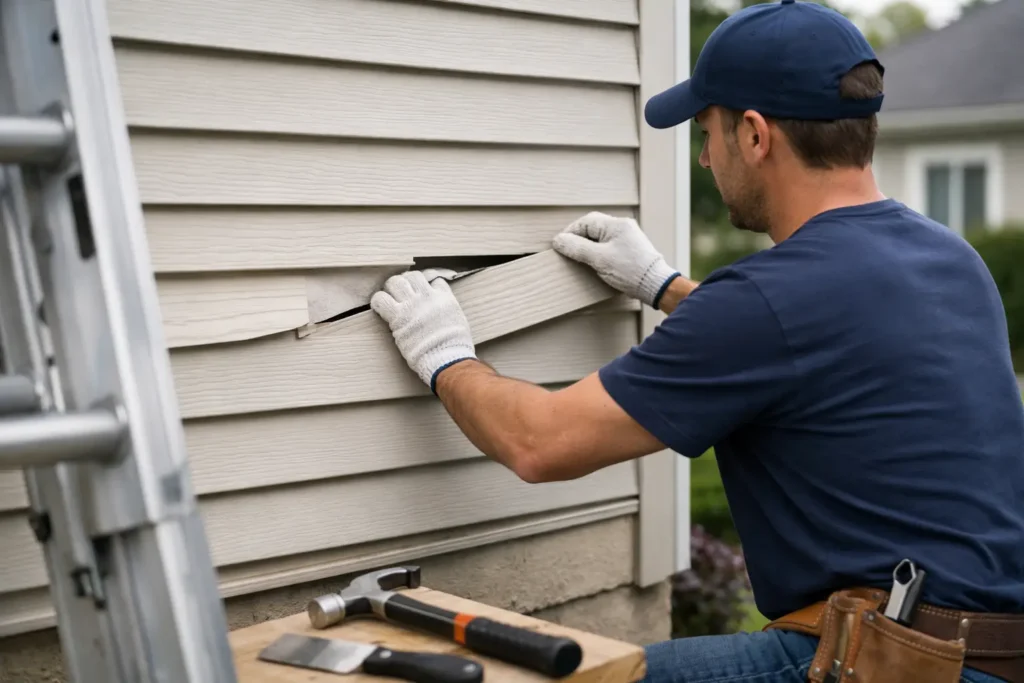
A hairline crack after a cold snap might not look urgent, but vinyl siding rarely gets better on its own. If you are asking, can cracked vinyl siding be repaired, the short answer is yes – sometimes. The real question is whether a repair will hold up through Ohio wind, freeze-thaw cycles, and summer heat, or whether replacing the damaged panel is the smarter move.
For many homeowners, the damage starts small. A mower throws a rock. Hail leaves a split near the edge of a panel. A loose section flexes in strong wind and cracks around a nail slot. What matters most is not just the size of the crack, but where it is, what caused it, and whether moisture can now get behind the siding.
Can cracked vinyl siding be repaired or does it need replacement?
It depends on the type of crack and the condition of the surrounding siding. Small cosmetic damage on an older wall may sometimes be patched well enough to reduce water exposure and improve appearance. But vinyl siding is designed as an interlocking panel system, and once a panel is split, brittle, or warped, replacement is often the cleaner and longer-lasting solution.
A temporary repair may make sense if the crack is short, the panel is still firmly locked in place, and the area is protected from direct weather exposure. That is more likely on a sheltered side of the home or in a spot with minimal wind pressure. If the crack runs across the face of the panel, sits near a seam, or shows signs of movement, patching usually becomes a short-term fix.
This is especially true in Northwest Ohio. Repeated expansion and contraction can turn a minor crack into a wider opening. Water that gets behind the siding may not always reach the sheathing right away, but it can still create trouble around house wrap, trim, and fastener points.
What causes vinyl siding to crack?
Most cracked vinyl siding is tied to impact, age, or installation issues. Cold weather makes vinyl less flexible, so even a small hit can produce a visible split in winter. Hail and windborne debris are common causes, but not the only ones.
Improper nailing can also be part of the problem. Vinyl panels need room to move. If they were fastened too tightly, they cannot expand and contract the way they should. That added stress can lead to buckling, edge damage, and cracking over time. Older siding may also become brittle from years of UV exposure, making repairs less reliable because the surrounding panel is already weakened.
In neighborhoods with mature trees or frequent lawn maintenance, impact damage is common near the lower courses of siding. Around Lima, Findlay, and nearby communities, winter weather adds another layer. Freeze-thaw cycles can widen existing cracks and expose weak areas that were not obvious in warmer months.
When a repair makes sense
Repair is most practical when the damage is limited and the rest of the panel system is still in good shape. A small puncture or short crack in one isolated area may be repairable if the material around it is not brittle and the panel has not pulled loose.
The goal of a repair is to keep water out, preserve the wall system behind the siding, and maintain a decent visual match until a full replacement is necessary or until a matching panel can be installed. For newer siding, this may be straightforward. For older siding that has faded significantly, even a successful repair can still stand out.
Some homeowners ask about caulk or vinyl patch kits. These can help in limited situations, but they are not universal fixes. Caulk alone is not a structural solution for a moving siding panel. It may crack, discolor, or attract attention if it is applied across a visible section. Patch materials can work better on small holes than on long splits, but they still depend on the panel being stable and the substrate behind it being dry.
When replacement is the better choice
If a crack is longer than a few inches, runs through a locking edge, appears in multiple places, or is paired with warping, replacement is usually the better route. The same goes for siding that feels chalky, brittle, or loose when touched. In those cases, the panel has likely lost the flexibility it needs to perform well.
Replacement is also worth considering when there may be hidden moisture issues. Staining, mold near seams, soft sheathing, or repeated cracking in the same wall section can point to a deeper problem. Fixing only the visible split may leave the real issue untouched.
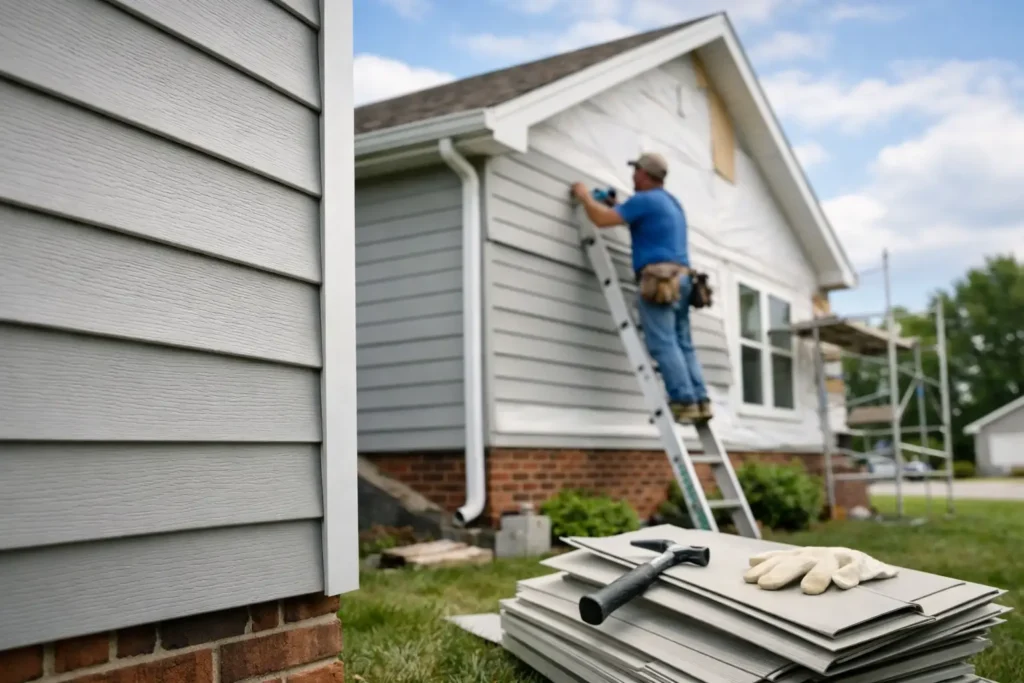
Storm damage is another factor. If one panel is cracked from hail or wind impact, nearby panels may also have stress damage that is easy to miss from the ground. A proper assessment looks at the full section, not just the most obvious break.
Why color matching matters more than homeowners expect
One reason people hesitate to replace a cracked panel is the fear that the new piece will not match. That concern is valid. Vinyl siding changes over time with sun exposure, weather, and age, so even the original color name may not guarantee a clean match years later.
This is where repair decisions become practical rather than theoretical. If the crack is small but the available replacement panel is a poor visual match, a short-term repair may make sense until a better match is found. On the other hand, if an exact or very close match is available, replacing one damaged panel is often the best outcome for both performance and curb appeal.
Experienced siding specialists pay attention not just to color, but also profile, texture, panel width, and exposure. Those details matter. A panel that is close in color but wrong in shape can still look obviously patched.
DIY repair versus professional repair
Homeowners can handle some minor siding issues, but cracked vinyl is not always as simple as it looks. Removing and reinstalling vinyl panels takes the right tools and a careful hand. It is easy to damage adjacent panels while trying to unhook the broken one, especially when the siding is older or cold.
The biggest DIY risk is treating the crack instead of the cause. If the damage came from impact and the rest of the wall is sound, a minor repair may be fine. But if the crack happened because the panel was overfastened, pulling, or already brittle, a surface fix will not last.
A professional repair also helps verify whether moisture has gotten behind the siding. That matters around windows, corners, and lower wall sections where water can sit longer. In some cases, what looks like one cracked panel turns out to involve trim movement, flashing issues, or repeated stress on the wall system.
For homeowners in older parts of Allen and Hancock counties, this is especially relevant. Homes with mixed exterior updates over the years may have repairs, additions, or trim transitions that change how siding performs. A crack near one of those transitions deserves a closer look.
Can cracked vinyl siding be repaired in winter?
It can, but winter repairs require more caution. Cold vinyl is less forgiving, which means panels are more likely to crack further during handling. Emergency stabilization may still be necessary if the opening is allowing wind or moisture behind the siding, but permanent replacement work is often easier and cleaner when temperatures are milder.
That does not mean you should ignore winter damage. Even a small crack can let in moisture during snowmelt or wind-driven rain. If you spot damage during the colder months, the smart move is to have it evaluated before it spreads.
What homeowners should look for after a crack appears
After you notice a crack, watch for movement in nearby panels, rattling in wind, moisture marks, and any signs that the panel has come unlocked. Also pay attention to repeated issues in the same area. If siding keeps cracking on one elevation of the home, there may be a bigger exposure problem related to wind, impact, or installation stress.
The sooner the damage is assessed, the more options you usually have. A fresh, isolated crack is far easier to address than a section that has been taking on weather for months.
Cracked vinyl siding does not always mean a full siding project is ahead. Sometimes one panel can be repaired or replaced cleanly and the rest of the wall keeps doing its job. The key is not guessing based on appearance alone. A small crack can be minor, or it can be the first visible sign that the panel system is under stress. Catching that early gives you the best chance of protecting the home without letting a manageable repair turn into a larger exterior problem.