A windstorm usually tells on your siding before it tells on anything else. One loose panel near a corner, a crack under a window, or a section that rattles every time the breeze picks up can all point to a bigger problem behind the surface. Vinyl siding storm damage repair is often less about the piece you can see and more about stopping water, air, and future failure from getting in where they should not.
For homeowners in northwest Ohio, that matters. Storms here do not always show up as dramatic, house-wide destruction. More often, the damage is localized and easy to miss at first. A hail hit can bruise one elevation. Straight-line winds can pull siding loose on the side of the home that takes the hardest exposure. Freeze-thaw cycles after the storm can then turn a small opening into moisture intrusion, insulation problems, and interior wall concerns.
What storm damage looks like on vinyl siding
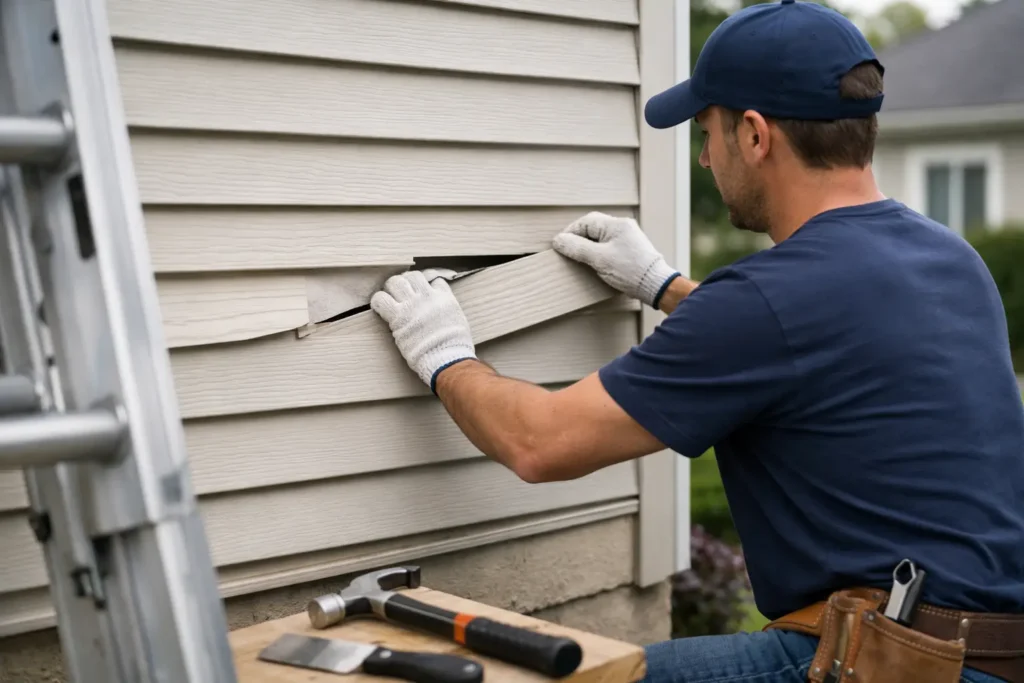
Not all storm damage is obvious from the driveway. Some signs are immediate, like panels torn off, hanging pieces, or corners bent back after high winds. Others are quieter. You might notice rippling, buckling, cracked lock seams, or a section that no longer sits flat against the wall.
Hail can leave chips, punctures, or stress fractures, especially on older siding that has become more brittle over time. Wind damage often shows up around the edges first – starter strips, corners, and pieces near rooflines or gables. If water gets behind the siding, staining, soft sheathing, mold odors, or rising indoor humidity can start to follow.
One of the trickiest parts of vinyl siding storm damage repair is that the visible panel is not always the full extent of the issue. Siding is a system. If the panel came loose because the fastening pattern failed, the wall underneath moved, or trim pieces were damaged, replacing only the face panel may not solve the real problem.
Why fast vinyl siding storm damage repair matters
Vinyl siding is designed to shed water, not to act as a waterproof barrier by itself. Once a storm opens a gap, rain can work behind the siding and reach house wrap, sheathing, and insulation. In a heavy Ohio storm, that can happen quickly.
Speed matters for another reason too. Loose siding rarely stays the same. Wind catches lifted edges and turns a manageable repair into a wider section failure. What started as one cracked panel can spread to neighboring courses, soffit edges, or trim around windows and doors.
There is also the appearance issue, and that is not just cosmetic. When panels shift, fade patterns become more noticeable, and improperly seated replacement pieces can stand out. A careful repair protects curb appeal, but more importantly, it restores the siding system so it expands, contracts, and drains the way it should.
Can storm-damaged vinyl siding be repaired, or does it need replacement?
It depends on the kind of damage, the age of the siding, and whether a good color and profile match still exists.
If the damage is limited to a few panels and the surrounding pieces remain secure, repair is often the right move. This is common after isolated wind damage or a branch strike. A targeted repair can restore the wall without disturbing large areas of otherwise sound siding.
If the siding has widespread cracks, brittle edges, repeated blow-offs, or significant fading, full section replacement may make more sense. The same goes for cases where moisture has affected the sheathing underneath. Once the wall assembly itself is compromised, the conversation shifts from panel swap to broader exterior repair.
Matching is often the deciding factor. Vinyl siding changes over time due to sun exposure and weathering. Even when the original color is still manufactured, a brand-new panel can look noticeably different next to older siding. That does not always rule out a repair, but it means the work needs to be planned carefully. Sometimes the best result comes from repairing a less visible wall with matched material and moving existing panels as needed.
The repair process, step by step
A solid repair starts with inspection, not installation. The goal is to identify what failed, how far the damage spread, and whether water got behind the siding. That includes checking panel locks, trim channels, corners, house wrap condition, and the fastening approach.
Once the damaged area is mapped out, the affected panels are carefully unlocked and removed. This sounds simple, but vinyl can crack if handled incorrectly, especially in colder weather. The surrounding panels also need to stay intact. Rushed removal often creates more damage than the storm did.
Next comes the wall check. If moisture reached the sheathing, that issue needs to be addressed before new siding goes on. Wet or soft substrate, damaged wrap, or failed flashing around openings should never be covered up just to finish the visible repair.
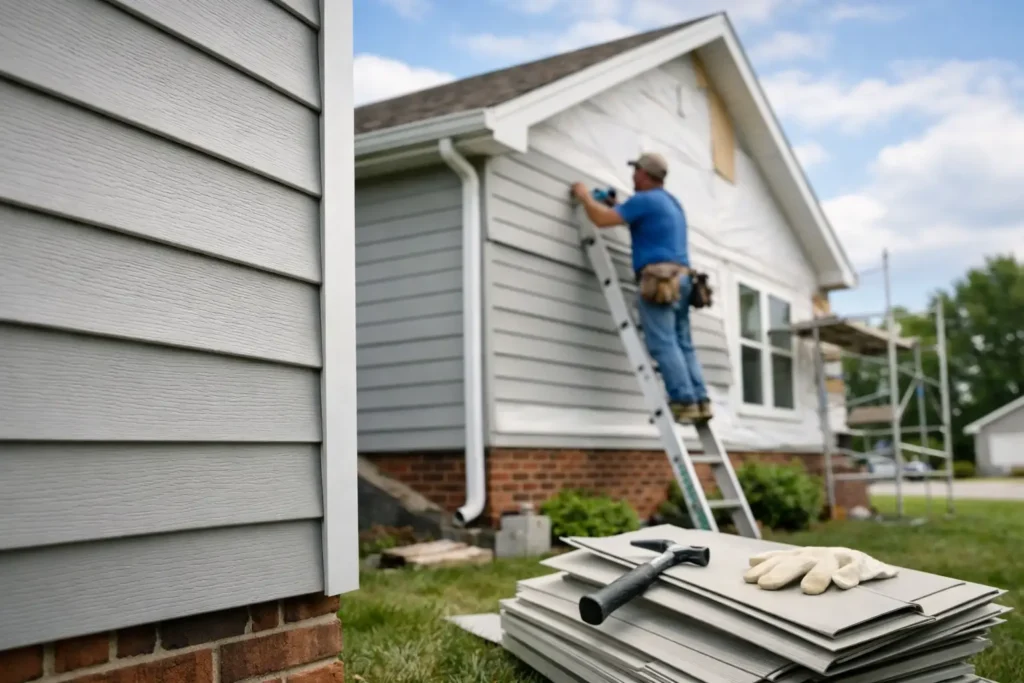
After the wall is ready, replacement panels are cut, fitted, and fastened with room for normal expansion and contraction. This is where experience matters. Vinyl should not be nailed tight. If it is over-fastened, it can buckle later in warm weather. If it is installed too loose or improperly seated, it can rattle, gap, or pull away in the next storm.
The last step is blending the repair into the existing exterior. That means checking alignment, exposure, trim fit, and overall appearance from multiple angles. Good repair work should not just close the opening. It should restore performance and look intentional.
Common mistakes homeowners should avoid
The biggest mistake is waiting too long because the damage looks minor. Even a small crack can let water in repeatedly, especially on elevations that take driving rain. Storm damage rarely improves with time.
Another issue is assuming any loose panel can just be snapped back in place. If the locking edge is damaged, if the nailing hem has torn, or if the panel stretched during the storm, reattaching it may only be a temporary fix. It can fail again with the next gust.
Do-it-yourself repairs also run into matching problems and installation errors. Vinyl siding needs the right profile, correct overlap, proper clearance, and appropriate fastening. A panel that looks close enough from the store shelf may not fit the existing run correctly. That can lead to gaps, warping, or a repair that stands out from the street.
Storm patterns in Ohio make siding details matter
In places like Lima, Findlay, and nearby communities, siding does not just deal with one kind of weather. It handles wind, hail, hard rain, humid summers, and winter freeze-thaw swings. That combination is why repairs should focus on long-term performance, not just immediate appearance.
A home that takes repeated west-side wind exposure may need more attention at corners and along upper wall sections. Older homes in established neighborhoods may also have previous repairs hidden beneath the surface, which can complicate new storm work. Building code and permit requirements can come into play when damage extends into broader exterior components, especially if trim, sheathing, or water-management details need correction.
This is where specialized siding experience matters more than general patchwork. Vinyl has its own movement, attachment rules, and weather-response patterns. Repairs that ignore those realities often look fine for a month and then start to show stress once temperatures shift.
When repair is urgent
Some storm damage can wait a short time for a planned fix. Some cannot. If siding is missing completely, if you can see underlayment or wood, if water is getting in around windows, or if panels are flapping in the wind, the repair should move quickly. The same applies if interior signs show up, such as damp drywall, stains, musty odors, or drafts that were not there before.
Urgency also rises when the damaged area sits on a highly exposed side of the house. An opening on a sheltered wall is one thing. An opening on the side that catches every storm is another.
What good repair should achieve
Good vinyl siding storm damage repair should do three things at once. It should stop water and air intrusion, restore the siding system so it performs properly in future weather, and keep the home looking consistent.
That last point matters more than some homeowners expect. A repair should not leave one wall looking patched together with obviously mismatched pieces or uneven lines. The best work balances function and appearance because both affect home value.
Ohio Vinyl Siding Guru approaches storm repair with that balance in mind – checking the full wall assembly, not just the broken panel, and focusing on clean matching and durable installation details that hold up in local weather.
After a storm, siding damage is easy to downplay if the roof looks fine and the windows survived. But your siding is the first shield your walls have. When it is cracked, loose, or pulled open, the smartest move is to treat it like the protective system it is, not just another exterior finish.