If you have spent one Ohio winter watching snow pile against your house and one humid summer checking for swelling, peeling, or moisture damage, the vinyl siding vs wood siding Ohio debate stops being theoretical fast. What looks best on day one matters, but so does how that exterior handles freeze-thaw cycles, wind-driven rain, summer humidity, and the steady wear that comes with Midwest weather.
For many homeowners, this decision comes down to two priorities that do not always point in the same direction. Wood siding offers a classic appearance that many people still love, especially on older homes with strong architectural character. Vinyl siding, on the other hand, is usually the material people choose when they want durability, lower maintenance, and more predictable performance in Ohio conditions.
Vinyl siding vs wood siding Ohio homeowners should weigh carefully
Ohio is not an easy environment for exterior materials. You get moisture, temperature swings, storms, and long heating seasons. That means siding is not just about curb appeal. It is part of your home’s moisture control, insulation strategy, and long-term maintenance plan.
Wood siding has natural charm. On the right home, it can look warm, detailed, and authentic in a way that manufactured products often try to imitate. But wood is also vulnerable to many of the exact conditions Ohio delivers regularly. It can absorb moisture, rot over time, invite insect activity, and require repainting or resealing to stay protected.
Vinyl siding is less romantic, but that is also part of its appeal. It is built for homeowners who want reliable exterior protection without adding another ongoing maintenance project to the calendar. Modern vinyl products also come in more styles and colors than many people expect, including profiles that fit both traditional and newer homes.
How Ohio weather changes the decision
The biggest difference between these materials in Ohio is not simply appearance. It is how each one responds to repeated seasonal stress.
Winter is hard on wood. When moisture gets into unprotected or aging wood siding and temperatures drop, that expansion and contraction cycle can lead to cracking, splitting, and deterioration. Ice, snow, and wind do not help. Once paint or sealant begins to fail, the risk increases quickly.
Spring and summer create a different set of problems. Heavy rain, muggy air, and shaded sections of the home can keep wood damp for long periods. That raises the risk of mildew, rot, and paint failure. In neighborhoods with mature trees, siding may stay wetter longer, which puts even more pressure on the material.
Vinyl handles moisture differently because it does not absorb water the way wood does. That makes it a practical fit for Ohio’s wet seasons and humidity. It can still be damaged by severe impact or poor installation, but routine exposure to moisture is generally less of a threat. For homeowners who want fewer weather-related surprises, that matters.
Appearance and curb appeal
Wood siding still has one clear advantage – natural character. It offers grain, texture, and a traditional look that works especially well on historic homes, cottages, and certain custom designs. If preserving an original architectural style is the top goal, wood may be worth the added upkeep.
That said, vinyl siding has improved significantly. Many homeowners still picture the flat, faded products seen on older remodels, but current vinyl options are far more refined. There are horizontal lap styles, vertical panels, shake-inspired designs, and color choices that work well on ranch homes, two-story colonials, and updated suburban exteriors.
For many houses in places like Lima, Findlay, Elida, and Shawnee Township, vinyl delivers a clean, finished look that fits the neighborhood and stays consistent over time. It may not replicate real wood perfectly up close, but it does give homeowners a broad range of attractive options without the same maintenance burden.
Maintenance is where the gap gets wider
This is often the section that settles the decision.
Wood siding demands regular attention. That may include scraping, painting, caulking, sealing, replacing damaged boards, and inspecting for hidden moisture problems. None of that is unusual. It is simply the reality of owning a wood-sided home in a climate with moisture and temperature swings.
If you stay ahead of maintenance, wood can last well. If you fall behind, problems tend to compound. What starts as peeling paint can turn into water intrusion, rot, and repair work behind the visible surface.
Vinyl siding is far more forgiving. It does not need painting, and normal maintenance usually involves periodic cleaning and checking for isolated storm damage or loose panels. For busy homeowners, that lower-maintenance profile is one of vinyl’s strongest advantages. It reduces the amount of ongoing exterior work needed to keep the home looking presentable and protected.
Energy efficiency and comfort
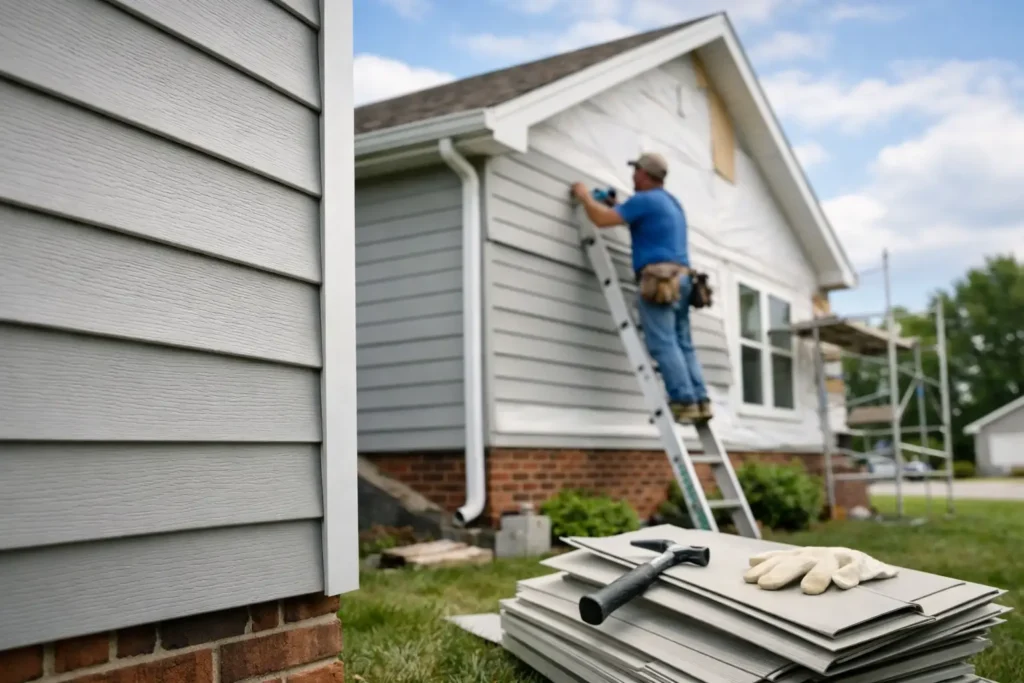
Siding alone does not determine your utility bills, but it does affect the building envelope. This is especially true when the project includes house wrap, insulation improvements, and careful installation around windows, doors, and trim.
Wood has some natural insulating properties, but that does not automatically make it the better energy performer in the field. A lot depends on age, condition, gaps, and how the system was installed. Older wood-sided homes often have drafts and moisture issues that undermine comfort.
Vinyl can pair well with insulated backing and updated weather barriers, which helps improve thermal performance and reduce air leakage. In Ohio, where heating season is long and summer humidity can strain cooling systems, that added efficiency can make a noticeable difference in indoor comfort.
This is one of those areas where installation quality matters just as much as material choice. Even a good product will underperform if it is poorly fitted, loosely attached, or not integrated correctly with trim and flashing.
Repairs and long-term durability
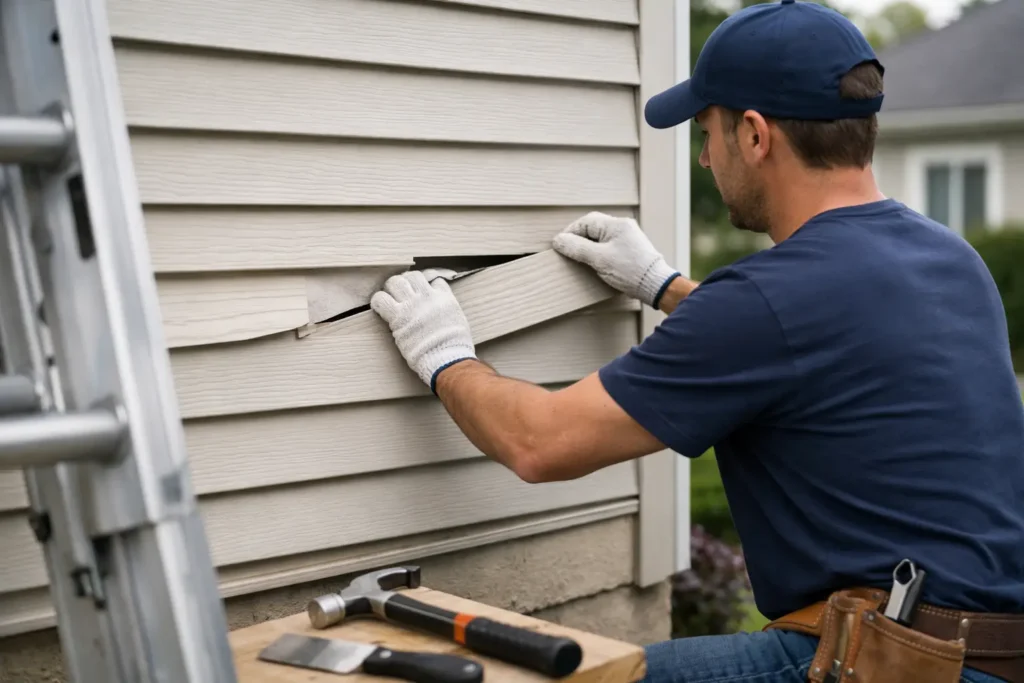
Wood can be repaired selectively, and that is one reason some homeowners keep it. If one board is damaged, it is often possible to replace that section rather than redo the entire exterior. For houses with custom trim details or historic elements, that flexibility has value.
But wood repairs are not always simple in practice. Matching aged paint, dealing with hidden moisture damage, and finding problems beneath the surface can make repairs more involved than they first appear.
Vinyl repairs tend to be more straightforward when the issue is isolated, such as storm damage to a few panels. Color matching can matter, especially on older siding that has faded over time, but modern systems are generally built around replaceable sections. For many homeowners, that means fewer surprises and faster restoration after wind or impact damage.
Durability also favors vinyl in most standard Ohio conditions. Wood can absolutely last, but it usually lasts because someone keeps working at it. Vinyl tends to hold up with less intervention.
When wood siding still makes sense
Wood is not the wrong choice for everyone. It makes sense when architectural authenticity is a priority, when the homeowner is committed to regular upkeep, or when the house has a style that genuinely benefits from natural material detail.
It may also be the better fit in cases where preserving the original look of the home matters more than reducing maintenance. Some homeowners enjoy that responsibility and see it as part of caring for the property.
The key is being realistic. Choosing wood in Ohio means signing up for ongoing maintenance, not just enjoying a certain look.
When vinyl is usually the better fit
For most homeowners comparing vinyl siding vs wood siding Ohio conditions tend to push the answer toward vinyl. That is especially true when the main goals are dependable weather resistance, simpler maintenance, energy-conscious performance, and a clean exterior that keeps its appearance without frequent repainting.
Vinyl is often the practical choice for families who do not want to monitor exterior surfaces every season, for homeowners updating from older aluminum or worn wood, and for anyone planning improvements with long-term function in mind. It is also a strong option when storm exposure, moisture concerns, or aging siding have already started causing headaches.
That practical edge is why specialists like Ohio Vinyl Siding Guru focus so heavily on climate-fit installation and material performance rather than just appearance alone.
The better question is how you want to live with the siding
The best siding choice is not always the one with the nicest sample board. It is the one that fits your home, your expectations, and the amount of maintenance you realistically want to handle over the next decade.
If you love the look of real wood and are prepared to protect it consistently, wood can still be the right choice. If you want strong curb appeal, better resistance to Ohio weather, and less upkeep from season to season, vinyl is usually the smarter fit.
A house in Ohio does not need perfect siding. It needs siding that can keep up with the weather and with the way you actually live.