If your weekends keep getting eaten up by scraping paint, washing mildew, or checking for loose exterior boards after a storm, siding stops feeling like a finish choice and starts feeling like a maintenance problem. That is why so many homeowners start by asking about low maintenance house siding options, especially here in Ohio where freeze-thaw cycles, wind, humidity, and summer sun all test a home’s exterior year after year.
The catch is that low maintenance does not mean zero maintenance. Every siding material has tradeoffs. Some resist moisture better. Some hold color longer. Some take a hit from hail better than others. The right choice depends on your home, your expectations, and how much upkeep you realistically want to deal with over the next 20 to 30 years.
What makes siding truly low maintenance?
A siding product earns the low maintenance label when it does four things well. It resists moisture, keeps its finish without frequent repainting, handles temperature swings without constant repairs, and can be cleaned without special treatments or major labor.
For homeowners in places like Lima, Findlay, and nearby communities, weather resistance matters just as much as appearance. A siding material may look great in a showroom, but if it absorbs water, chips easily, or requires repainting every few years, it will not feel low maintenance for long.
That is why the conversation should focus on long-term upkeep, not just installation day. The best option is usually the one that gives you the fewest recurring problems while still fitting the style of your home.
Low maintenance house siding options worth considering
Vinyl siding
Vinyl siding is usually the first material homeowners compare, and for good reason. It is one of the most practical exterior choices for reducing ongoing upkeep. It does not need painting, it will not rot, and normal dirt or algae buildup can usually be cleaned with a simple wash.
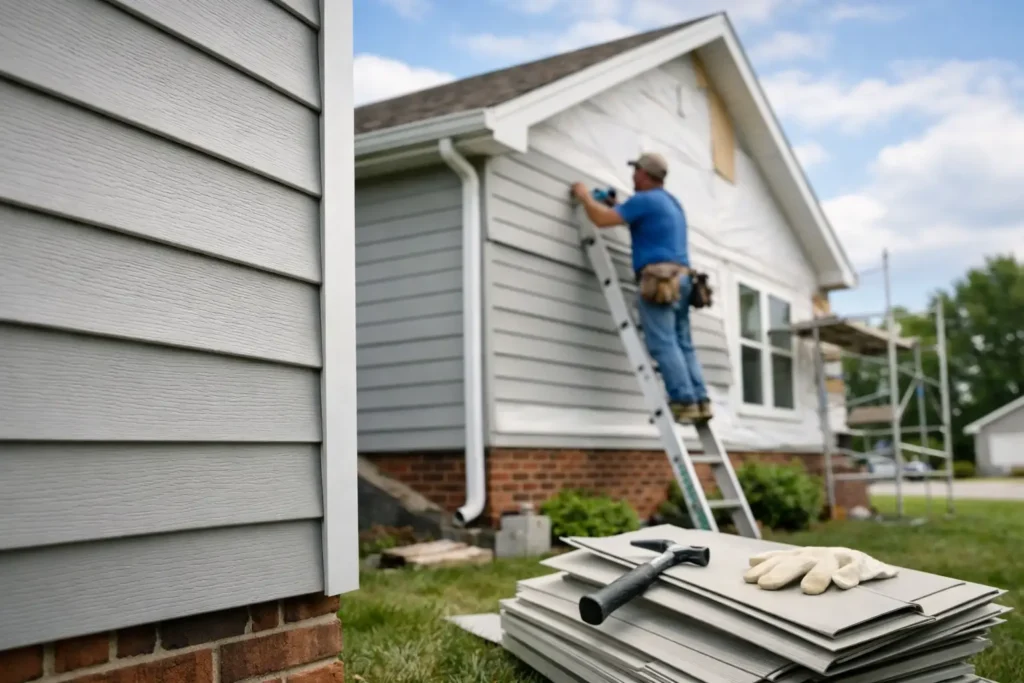
For Ohio homes, vinyl performs especially well because it handles moisture better than wood-based materials. Quality installation matters here. Panels need room to expand and contract through hot summers and cold winters, and trim details have to be done carefully around windows, doors, and rooflines. When installed correctly, vinyl is dependable and easy to live with.
It also gives homeowners flexibility in color and style. If you are replacing older aluminum or faded siding on a neighborhood home, color matching and profile selection can make a major difference in how natural the finished exterior looks.
The tradeoff is impact resistance. Standard vinyl can crack if it takes a hard hit in very cold weather, and lower-grade products may fade faster over time. That is why material quality and installer experience matter more than many people realize.
Insulated vinyl siding
Insulated vinyl siding takes the low-maintenance benefits of standard vinyl and adds a rigid foam backing. That extra layer helps the siding panel hold its shape, which can improve durability and reduce the hollow sound some homeowners notice with standard vinyl.
It can also help with energy efficiency by adding another layer of thermal resistance to the wall system. On older homes with uneven exterior walls, insulated panels may create a smoother finished appearance too.
From a maintenance standpoint, the appeal is simple. You still get the easy-care surface of vinyl, but often with better rigidity and improved resistance to minor warping. It is not a cure-all for insulation issues in the home, but it can be a smart option if you want practical performance without adding maintenance headaches.
Fiber cement siding
Fiber cement comes up often in discussions about durability. It is made to resist rot, insects, and fire, and it generally holds up well under tough conditions. Homeowners who want a more solid, painted-wood look often find it appealing.
But fiber cement is only low maintenance up to a point. It does not rot like wood, yet it still depends on a painted finish that will eventually need attention. In other words, the siding itself is durable, but the coating is still a maintenance item. In Ohio’s climate, repainting cycles and caulk maintenance are important parts of ownership.
It is also heavier and more labor-intensive to install. That does not make it a bad product. It just means it is not always the simplest long-term answer for homeowners whose main goal is minimal upkeep.
Engineered wood siding
Engineered wood siding is designed to offer the appearance of real wood with better resistance to moisture and pests. It is lighter than fiber cement and can deliver strong curb appeal, especially on homes where a traditional wood look matters.
Still, this category needs careful evaluation. Different manufacturers perform differently, and maintenance needs can vary based on the finish and local exposure conditions. Some products come prefinished and hold up well, while others may require more attention over time at seams, edges, and touch-up areas.
For homeowners focused on keeping maintenance as low as possible, engineered wood usually lands in the middle. It can be a reasonable balance between looks and upkeep, but it is not usually the most hands-off option.
Metal siding
Steel and aluminum siding can be durable, moisture-resistant, and relatively easy to clean. Metal does not invite termites, and it is not vulnerable to the same rot issues as wood products. For certain home styles, it can be a strong fit.
The issue is that metal siding has its own quirks. Dents can be a concern, especially with hail or impact from debris. Finish wear can also become more noticeable over time depending on the product and exposure. Older aluminum siding, in particular, may chalk or fade in a way that makes the home look tired even if the material itself is still intact.
Metal is low maintenance in some respects, but for many residential homeowners it is not as forgiving or visually flexible as vinyl.
Why vinyl often wins for Ohio homeowners
When homeowners ask for the best mix of durability, easy upkeep, and everyday practicality, vinyl is often the strongest answer. Not because it is perfect, but because it solves the problems that matter most to most households.
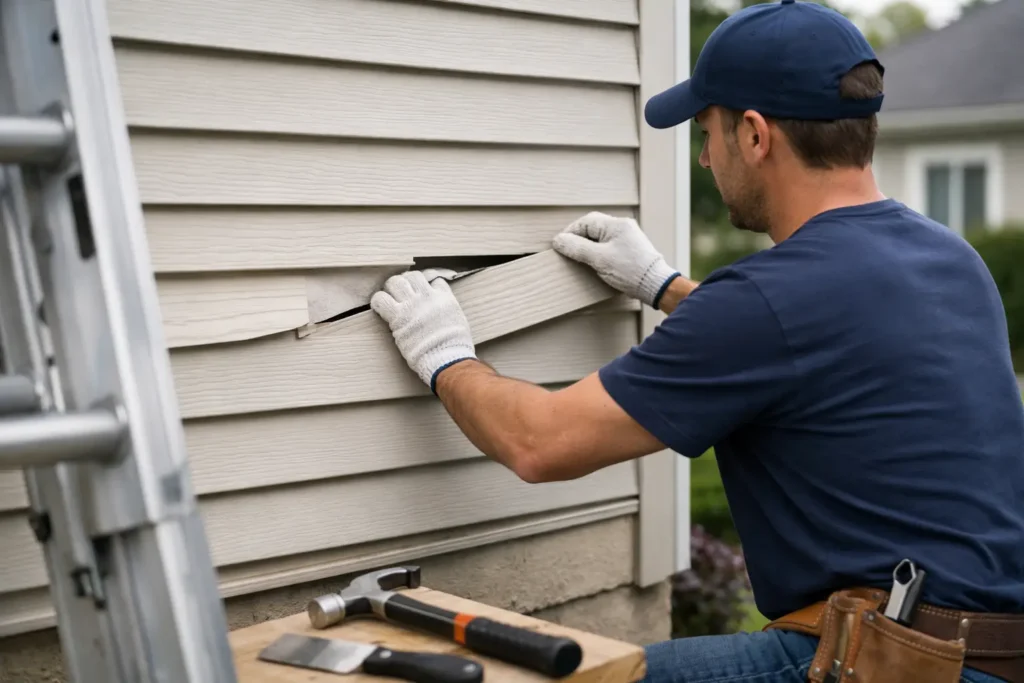
It handles moisture well. It does not require scraping and repainting. It offers a wide range of colors and profiles. It works well on full replacements and targeted repair projects. And when storms move through Allen or Hancock County, individual damaged sections can often be replaced without rebuilding the whole exterior.
That repair flexibility matters more than people expect. A low-maintenance material should not just be easy to clean. It should also be reasonably straightforward to fix when weather, age, or accidental impact causes damage.
For homes with rising utility bills, insulated vinyl can be especially worth a closer look. It is not the only factor in home efficiency, but improving the siding system can support better overall exterior performance.
How to choose between low maintenance house siding options
The right siding choice usually comes down to three questions. First, how much upkeep are you truly willing to take on? Second, what kind of weather exposure does your house get? Third, how important is a specific architectural look?
If your priority is the lowest routine maintenance possible, vinyl is hard to beat. If your priority is a painted, more substantial texture and you accept future repainting, fiber cement may still appeal to you. If style comes first and you are willing to monitor finish wear more closely, engineered wood might stay in the conversation.
The age of the home matters too. Older houses often have uneven walls, legacy trim conditions, or past moisture issues that influence which siding system will perform best. In many Ohio neighborhoods, a product that looks attractive on a new build may need a more careful approach on an older home with previous repairs or hidden substrate problems.
That is also why installation details should never be treated as secondary. Even the best siding material will struggle if moisture management, flashing, trim integration, and ventilation details are handled poorly.
A quick word on maintenance expectations
No exterior is completely maintenance-free. Vinyl still needs occasional washing. Caulked areas and trim should still be checked. After major wind events, any siding should be inspected for loose sections or impact damage.
But there is a big difference between occasional upkeep and constant upkeep. That difference is what most homeowners are really shopping for. They want an exterior that stays attractive, protects the home, and does not keep creating new weekend projects.
For many houses in this part of Ohio, that points back to vinyl and insulated vinyl more often than not. They fit the climate, reduce recurring labor, and offer a practical path for homeowners who want durability without making siding a long-term chore.
The best siding choice is usually the one that lets you stop thinking about siding so much and get back to enjoying the house itself.