A strong windstorm can leave damage that is easy to miss from the driveway. A few lifted panels, a loose corner, or a small crack near a seam may not look urgent at first. But when storm damage siding repair Findlay Ohio homeowners need gets delayed, wind and moisture usually make the problem larger and more expensive to correct.
Vinyl siding is built to handle Ohio weather, but it still has limits. Straight-line winds, hail, flying debris, and repeated freeze-thaw cycles can loosen panels, break locking edges, and open paths for water. Once that happens, the issue is no longer just appearance. It becomes about protecting the wall system underneath.
What storm damage looks like on vinyl siding
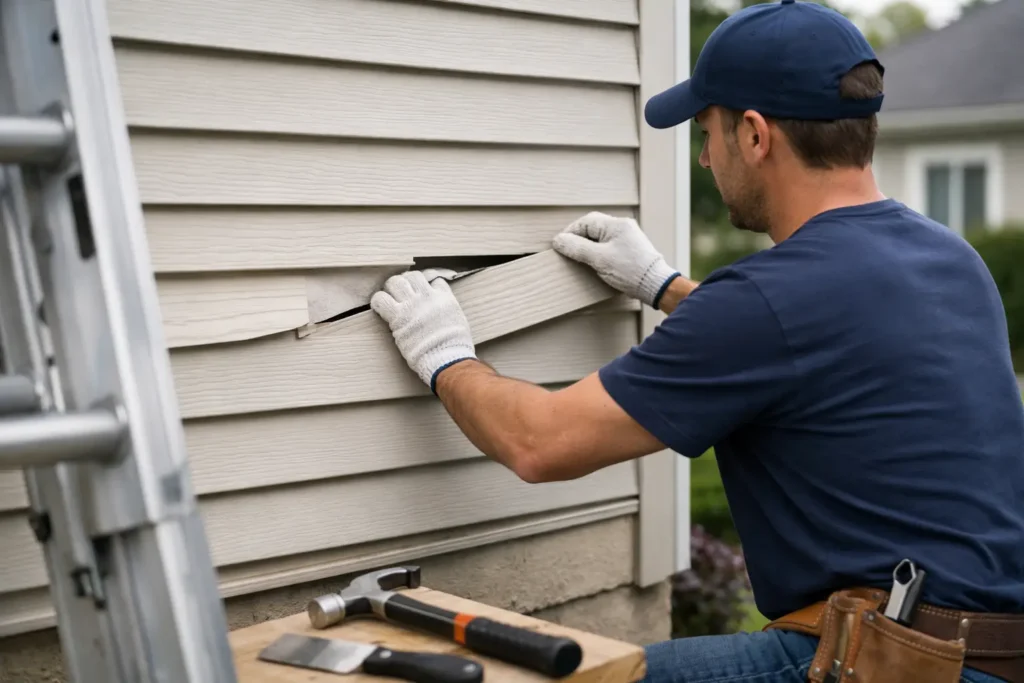
Some storm damage is obvious. You may see a section hanging loose after a wind event, cracked panels near the corners of the house, or dents and punctures caused by branches or debris. Other damage is harder to spot unless you know where to look.
Hail can leave impact marks that weaken a panel even when it does not fully break through. Wind can pull siding away from the nailing hem or unlock the panels from each other, creating gaps that let in rain. Around windows, doors, and rooflines, the trim pieces often show damage first because these areas take more direct force during a storm.
It is also common to find damage along the sides of the home that face prevailing winds. In this part of Ohio, weather can shift quickly, and homes in open areas often take a stronger hit than houses protected by neighboring structures or tree lines. That local pattern matters because siding damage is rarely uniform across the whole exterior.
Why fast storm damage siding repair in Findlay, Ohio matters
Waiting a week or two can turn a manageable repair into a bigger exterior problem. Vinyl siding is the first line of defense, but it works as part of a system. If wind has loosened a section or hail has cracked a panel, water can get behind the siding and reach the sheathing, house wrap, and framing.
That does not always lead to immediate interior leaks, which is why some homeowners assume the damage is minor. The trouble is that trapped moisture often stays hidden. Over time it can contribute to staining, mold risk, insulation problems, and wood rot. Even if the visible damage looks small, the hidden exposure may not be.
There is also the issue of panel movement. A damaged section rarely stays stable through the next round of wind. Once one piece has broken loose, nearby panels can start to flex more than they should. That is why timely repair protects more than the broken spot itself.
What to do right after a storm
Start with a ground-level inspection. Walk around the home and look for panels that are bent, missing, detached, or rattling. Check the corners, fascia-adjacent areas, and the walls that faced the storm. If you notice pieces on the ground, save them if possible. They may help with matching the profile and color later.
Take clear photos before anything is moved or patched. That creates a record of the condition right after the storm and helps document where the damage occurred. If water is visibly getting behind the siding, temporary protection may be needed until a proper repair can be completed, especially around windows, doors, and lower wall sections.
Avoid climbing ladders in wet or windy conditions. A lot of siding damage can be identified from the ground by someone who knows what panel distortion, seam separation, and trim failure look like. The goal early on is to prevent further exposure and get a clear picture of whether the problem is isolated or part of a wider wall issue.
Repair or replacement depends on the type of damage
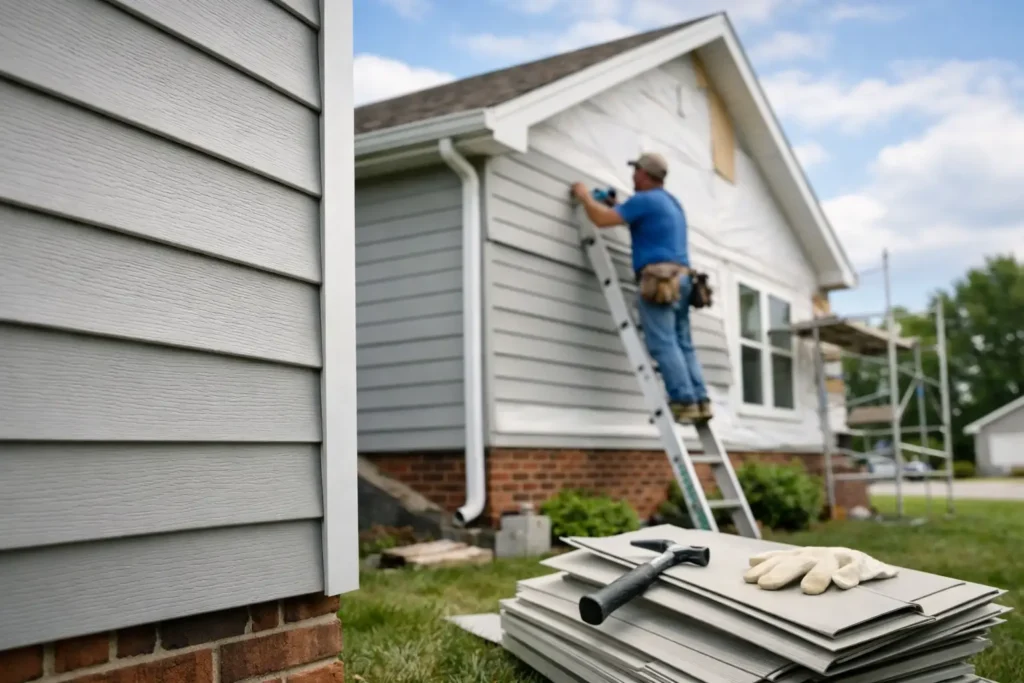
Not every storm calls for full replacement. In many cases, targeted repair is the right move, especially when the damage is limited to a few panels or one side of the home. If the existing siding is still structurally sound and the profile can be matched, replacing the damaged sections may restore both protection and appearance.
That said, repair is not always the best answer. It depends on the age of the siding, how brittle it has become, whether the locks and seams still hold properly, and whether there is widespread impact damage that affects multiple elevations. Older siding that has faded heavily or become fragile in repeated cold weather may not accept a durable spot repair.
A good inspection looks beyond the broken panel. It checks the fastening pattern, the condition of the underlayment, the trim system, and whether water has already reached deeper materials. Sometimes the visible damage is the smallest part of the job.
Matching color and profile is part of the repair
One of the biggest concerns homeowners have after a storm is whether repaired areas will stand out. That concern is valid. Vinyl siding comes in many profiles, textures, and shades, and older panels often fade over time.
A proper storm repair is not just about attaching a new piece that roughly fits. It means finding the closest possible match in style and color so the repaired section blends with the rest of the home. This is one reason a siding specialist usually gets better results than a general repair crew. Matching matters, especially on front-facing elevations and established neighborhoods where curb appeal is part of long-term home value.
Common trouble spots after Ohio storms
Some areas fail more often than others. Lower courses can take splashback and wind-driven rain. Gables and upper wall sections often see stronger uplift pressure. Corners can crack under impact or flex stress. Around windows and doors, the trim and J-channel may loosen first, allowing water entry even when the field siding still looks mostly intact.
Older homes can have another challenge. Previous repairs may have mixed panel brands or installation methods, which makes post-storm failure more likely. If the siding was installed too tightly or too loosely in the first place, a major temperature swing after a storm can expose weaknesses fast.
In Findlay and nearby communities, wind is often the main culprit, but hail and debris should not be underestimated. Even small impacts can compromise the surface and shorten the life of the panel.
What a thorough inspection should cover
A real storm assessment should include more than a quick glance at the broken area. The inspection should determine whether panels are cracked, unlocked, punctured, or torn from the nailing hem. It should also check corners, starter strips, J-channel, utility blocks, and other trim details that keep water moving out instead of in.
Moisture exposure behind the siding is just as important. If the storm opened gaps long enough for rain to get behind the cladding, the wall assembly may need closer evaluation. The best repair decisions come from understanding both the exterior damage and the condition of the materials underneath.
Because local weather patterns and home styles vary, experience with northwest Ohio homes matters. A ranch in an open subdivision may show a different damage pattern than a two-story home with more wind exposure at the gables. The repair plan should fit the house, not just the material.
How specialized vinyl siding repair helps
Storm damage is one of those situations where specialization pays off. Vinyl siding has to be handled carefully so the repair fixes the issue without creating new stress points. Panels need room to expand and contract. Seams need to lock correctly. Trim pieces need to direct water out, not trap it.
That is why homeowners often get better long-term results from a contractor focused on siding rather than one treating it as a side service. Ohio Vinyl Siding Guru works in this exact niche, which matters when the job requires exact panel replacement, color matching, and repair methods built around local weather conditions.
The goal is not just to make the wall look better for now. It is to restore the protective system so the home can handle the next storm season with fewer weak points.
When not to wait any longer
If you can see exposed sheathing, hear panels rattling in the wind, notice water stains inside, or find multiple cracked sections after a storm, it is time to move quickly. The same is true if a section has pulled away from the wall or trim has come loose near windows and doors.
Minor-looking damage has a way of spreading once wind gets under it. A panel that is only partly detached today can be fully gone after the next weather event. Acting early usually means a cleaner repair, better material matching, and less chance of hidden moisture issues developing behind the siding.
Storm damage does not always announce itself with a dramatic hole in the wall. More often, it starts with a loose edge, a hairline crack, or a panel that no longer sits quite right. Catching those signs early is one of the best ways to protect the home you have already invested in.